
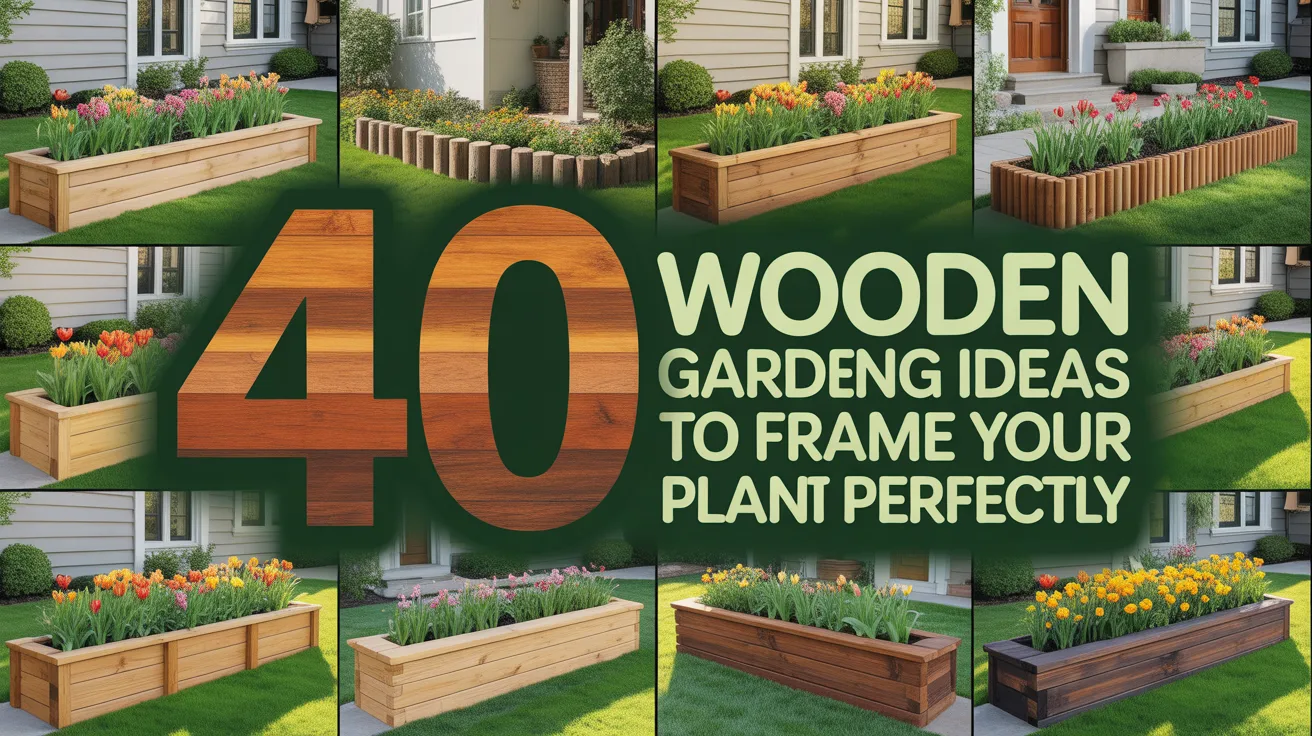
Garden edging is one of the simplest ways to give your front yard a clean, organized, and professionally finished look. It clearly separates flower beds from the lawn, prevents soil and mulch from spreading, and creates a strong visual boundary that enhances curb appeal. With the right edging, even the most basic landscape can look polished and thoughtfully designed.
Wooden garden edging, in particular, brings warmth and natural texture that blends beautifully with plants and grass. It works well with modern, rustic, farmhouse, and traditional home styles alike. From sleek timber boards to decorative carved borders, wood offers both versatility and charm. Choosing the right garden edging can completely transform how your outdoor space feels and functions.
1. Classic Timber Board Border
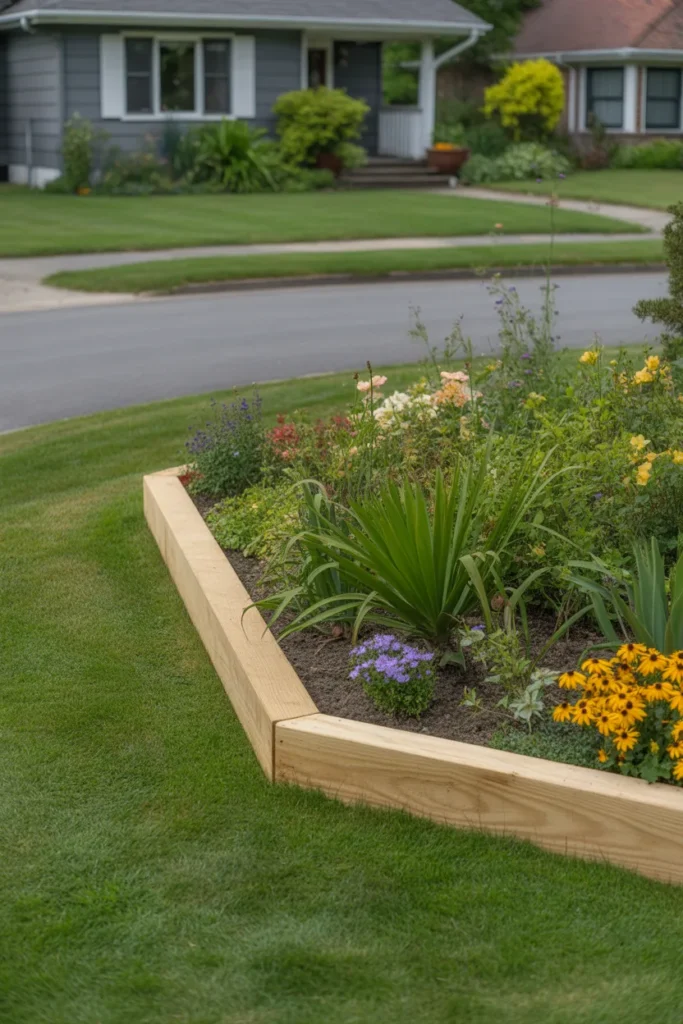
Classic timber boards create a clean and structured edge along front yard flower beds. The straight wooden planks clearly separate grass from plants, giving the landscape a tidy and polished appearance. This style works especially well for homes with symmetrical layouts and neat lawns. It’s simple, affordable, and instantly improves curb appeal.
2. Rustic Log Roll Edging
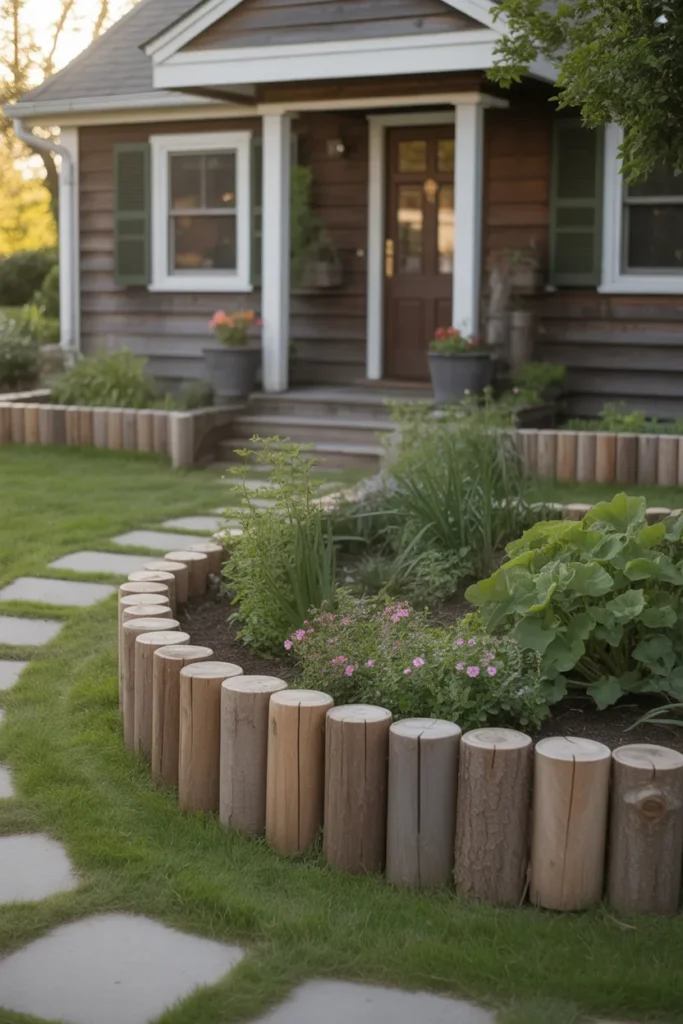
Rustic log roll edging adds warmth and texture to a front yard landscape. The rounded wood pieces create a soft border that complements curved flower beds beautifully. This option pairs perfectly with cottage-style or farmhouse exteriors. It gives the entrance of your home a welcoming and natural feel.
3. Reclaimed Wood Plank Border
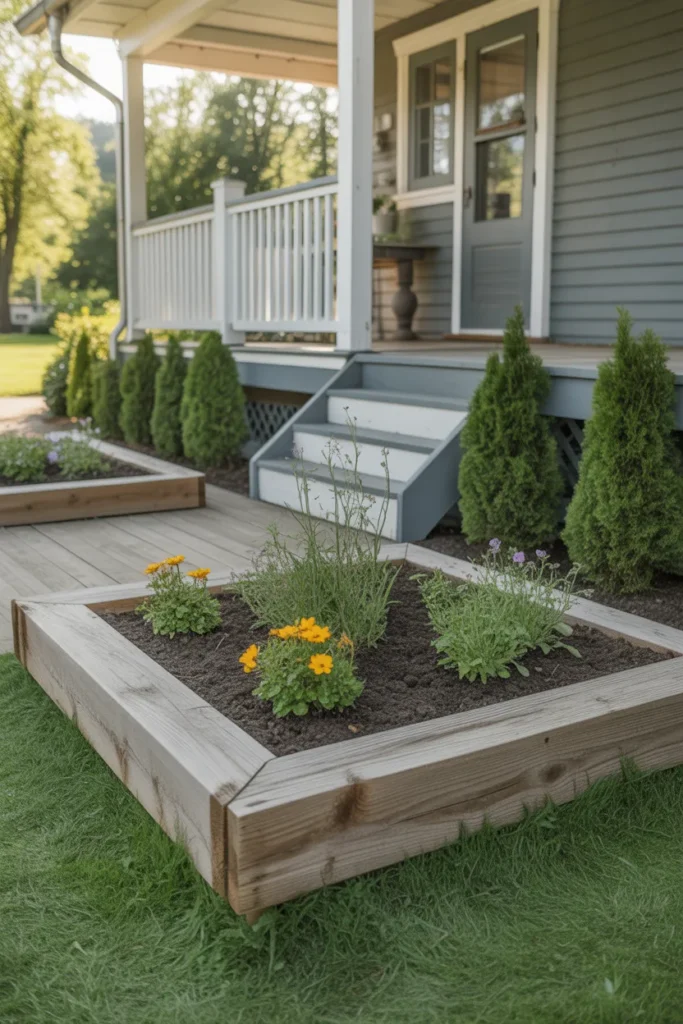
Reclaimed wood planks offer a sustainable and character-filled edging solution. The weathered texture adds depth and charm to modern or rustic home exteriors. This style works beautifully around shrubs near the porch or walkway. It creates an eco-conscious look while maintaining a structured border.
4. Wooden Sleepers for Bold Definition
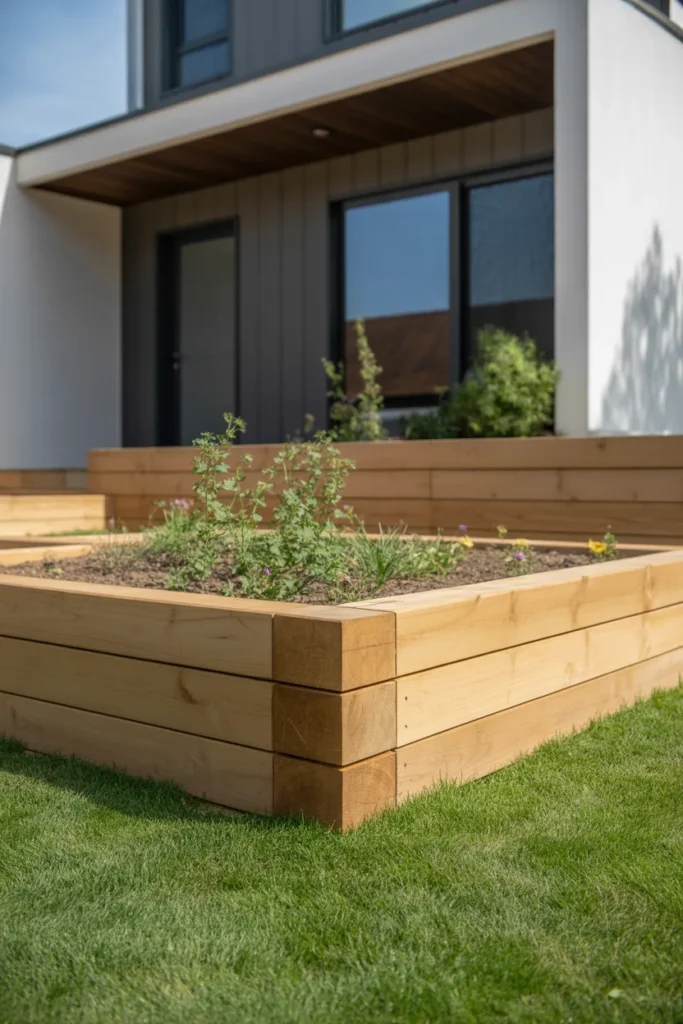
Wooden sleepers provide a bold and sturdy edge in front yard landscaping. Their thick structure makes flower beds stand out with strong visual definition. This style is ideal for contemporary homes with geometric garden layouts. It adds durability while giving your plants a beautifully framed space.
5. Curved Wooden Edging for Soft Lines
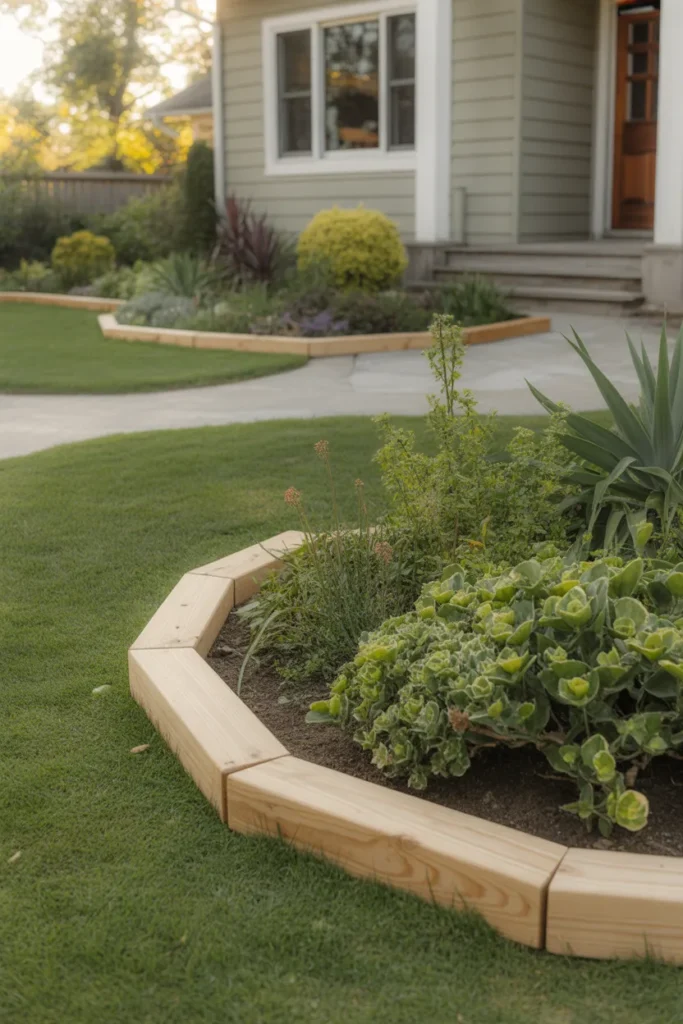
Curved wooden edging creates gentle transitions between lawn and flower beds. The flowing lines soften the overall look of the front yard. This design works especially well in landscapes with rounded planting areas. It makes the entrance feel more dynamic and visually appealing.
6. Vertical Wooden Stake Border
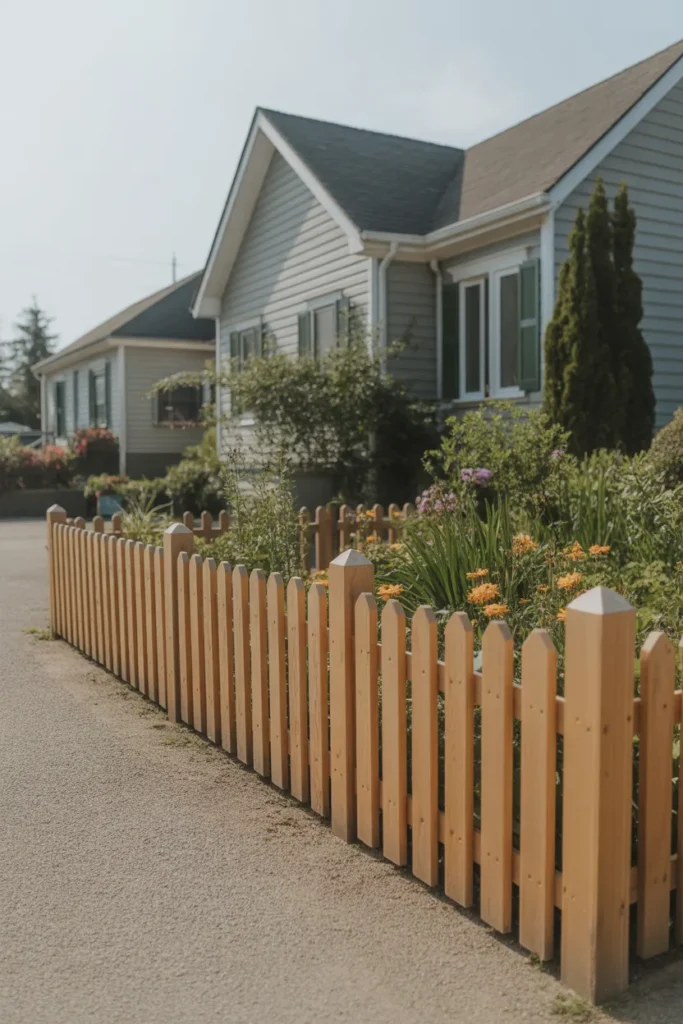
Vertical wooden stakes create a decorative and textured border. The upright pieces add subtle height while clearly separating plants from grass. This design is perfect for framing flower beds along driveways or walkways. It enhances structure without overwhelming the landscape.
7. Low Wooden Frame Edging
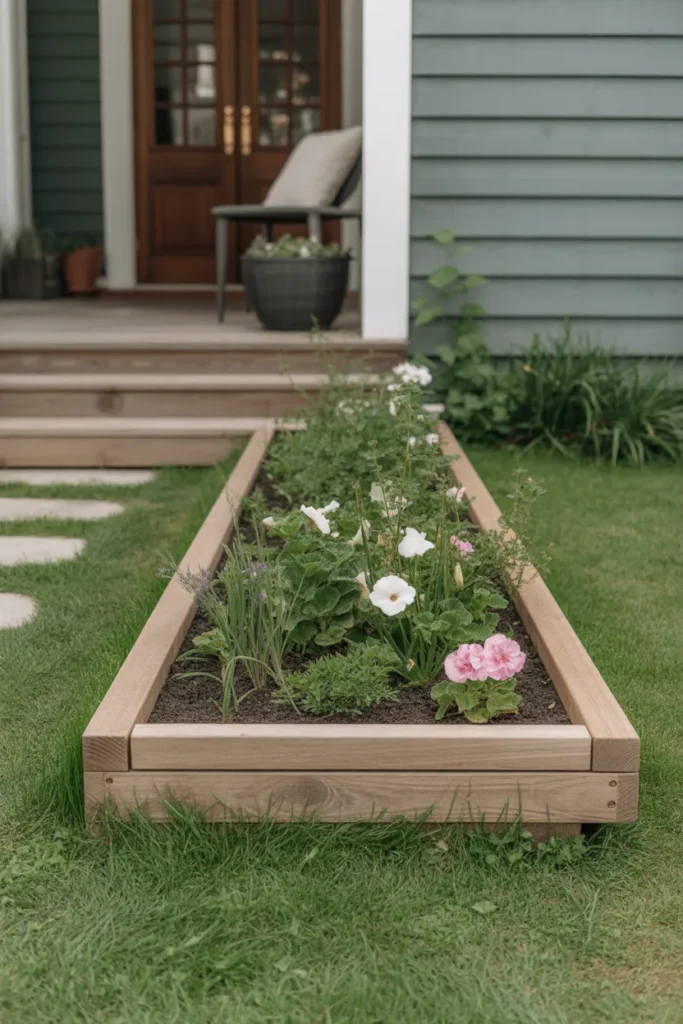
A low wooden frame offers a minimalist and clean garden edge. The slim profile keeps attention focused on flowers while maintaining organization. This option suits modern and traditional homes alike. It delivers a refined look without making the border too dominant.
8. Stacked Wooden Beam Border
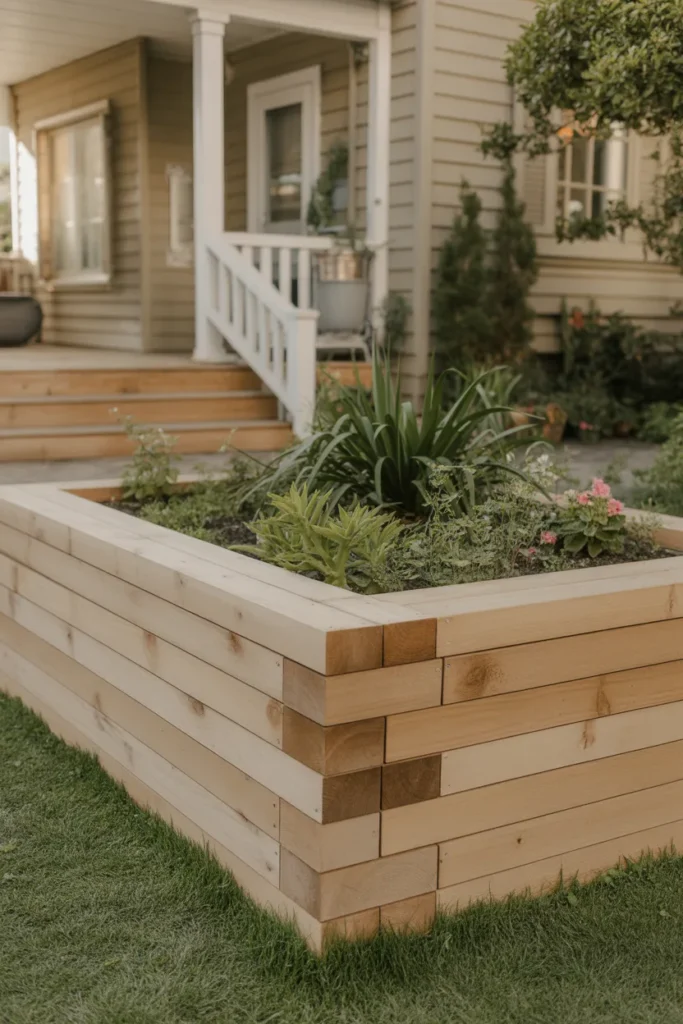
Stacked wooden beams add depth and dimension to front yard beds. The layered effect creates a subtle raised look that highlights plants beautifully. This edging works well for sloped lawns or elevated flower beds. It adds strength and visual interest to the landscape.
9. Wooden Log Slice Edging
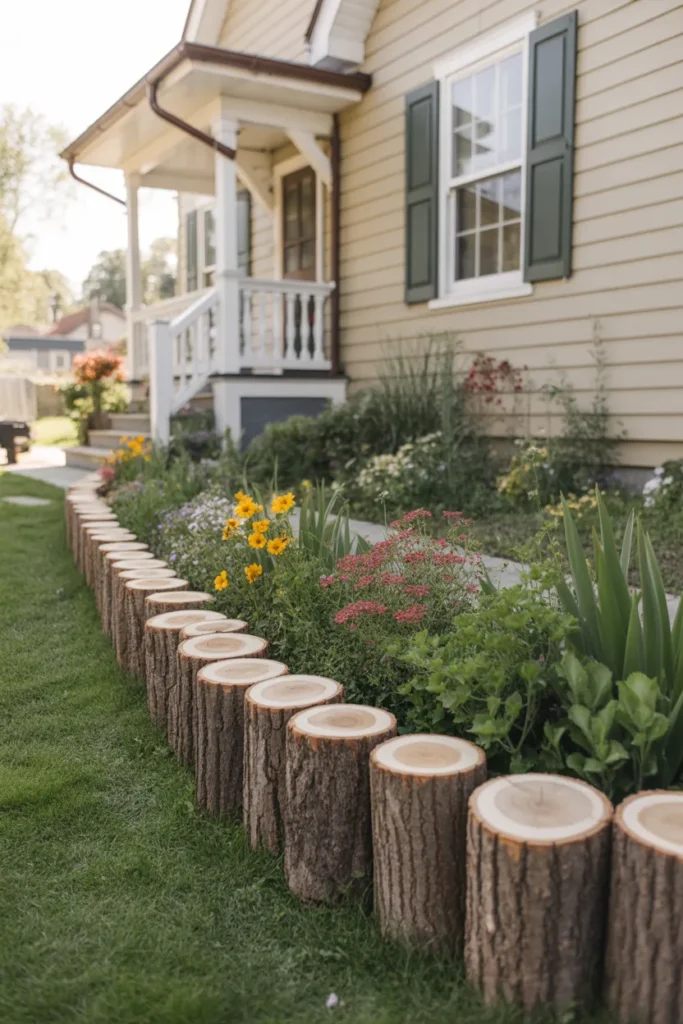
Wooden log slices bring a playful and natural touch to your yard. The circular shapes create a unique pattern that frames plants attractively. This style pairs wonderfully with colorful seasonal flowers. It gives the front of your home a warm and inviting personality.
10. Dark Stained Wood Border
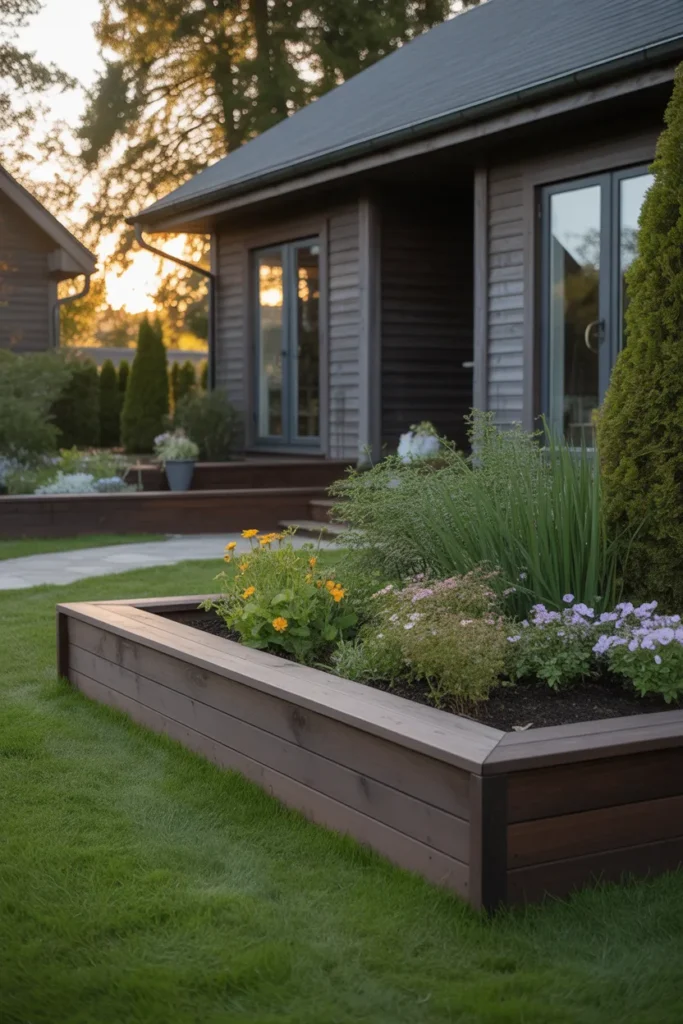
Dark stained wood edging adds contrast and elegance to front yard landscaping. The rich tone highlights greenery and colorful blooms beautifully. This option works especially well with light-colored house exteriors. It creates a sophisticated and polished first impression.
11. Wooden Crate-Style Edging
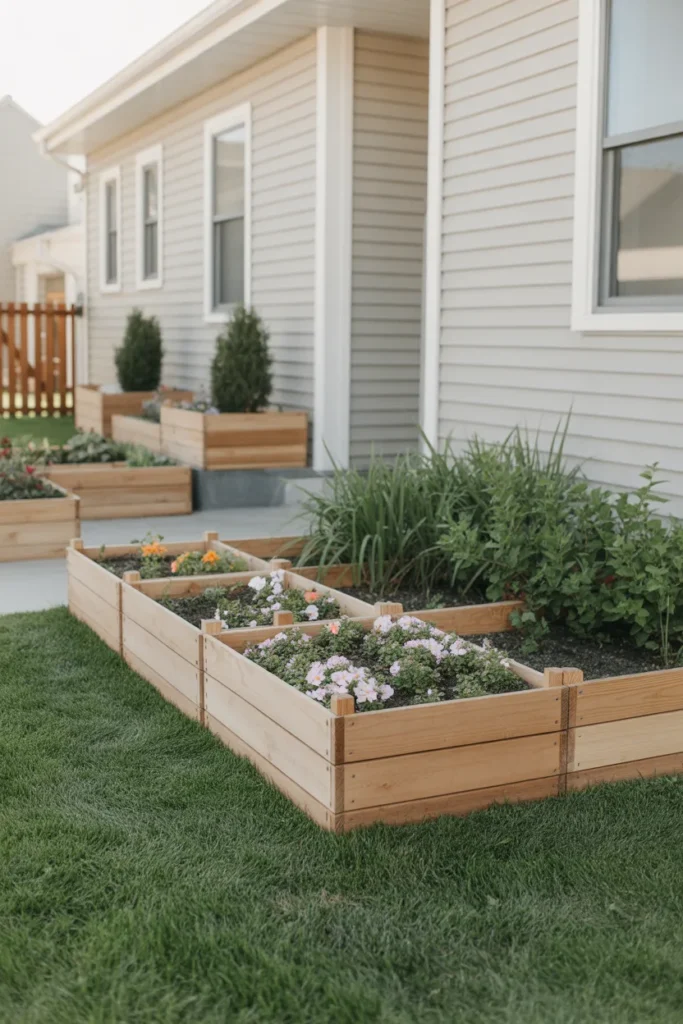
Wooden crate-style edging adds depth and structure to front yard flower beds. The boxy wooden frames create a layered and decorative appearance. This style works well near walkways leading to the main entrance. It provides both visual interest and clear plant separation.
12. Horizontal Slat Wood Border
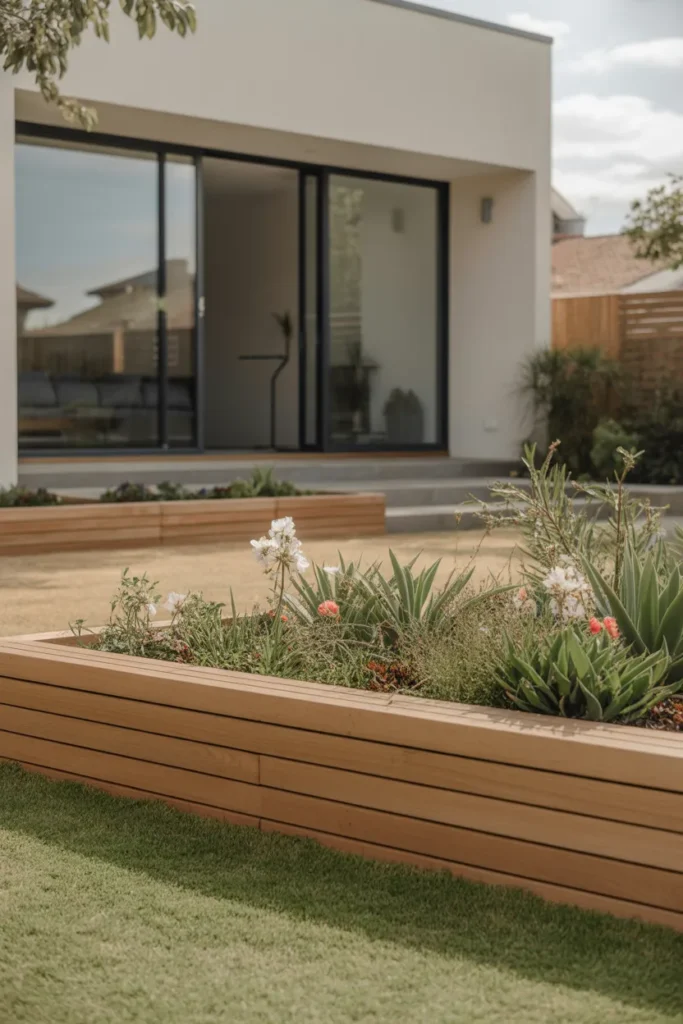
Horizontal slats create a sleek and contemporary garden border. The clean lines complement modern house exteriors beautifully. This edging style keeps the front yard looking organized and stylish. It offers a refined look without overpowering the plants.
13. Half-Buried Timber Edge
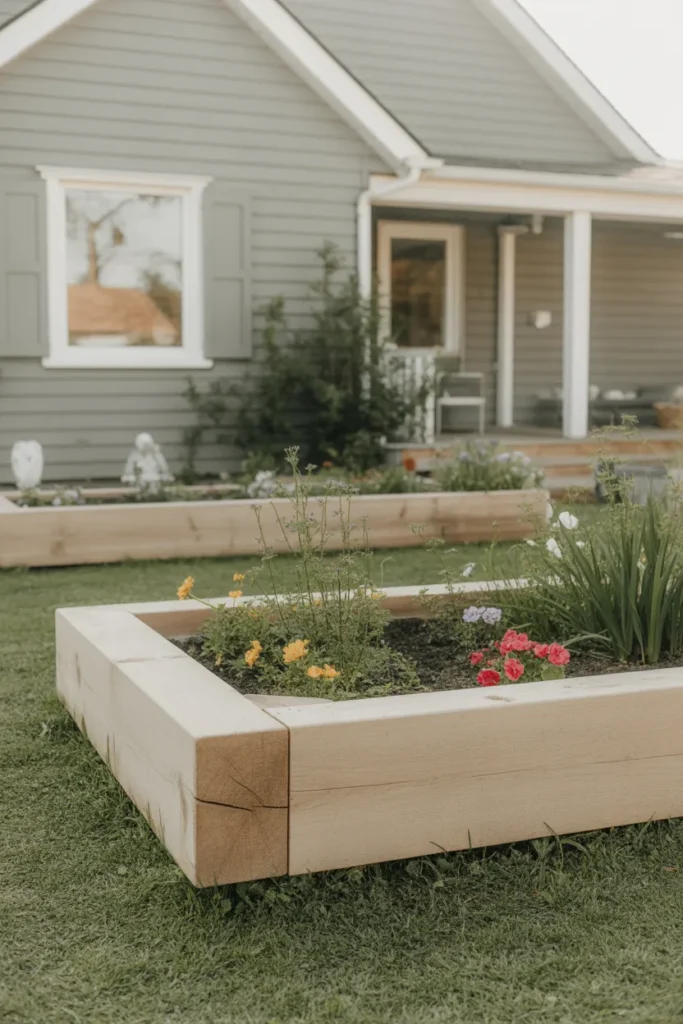
Half-buried timber edging provides a subtle yet effective boundary. The partially exposed wood blends naturally with grass and soil. This option is perfect for homeowners who prefer understated landscaping. It maintains structure while keeping the design simple.
14. Wooden Lattice Accent Border
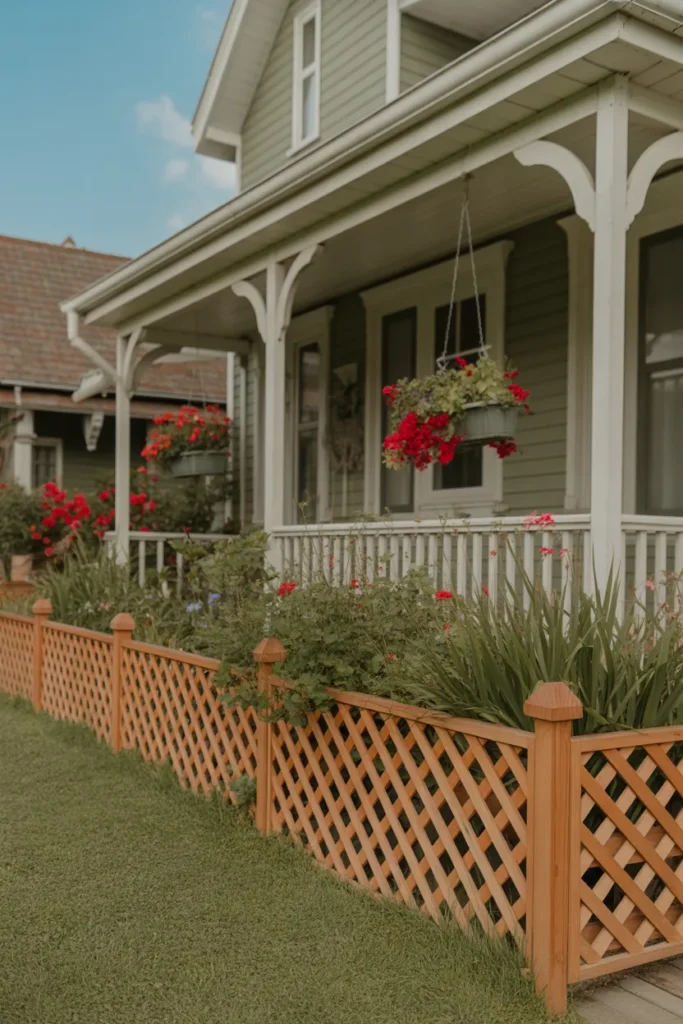
A wooden lattice border adds decorative detail to flower beds. The patterned design creates texture and visual charm. This style pairs beautifully with climbing plants and cottage-style homes. It enhances curb appeal with a delicate touch.
15. Raised Wooden Planter Edge
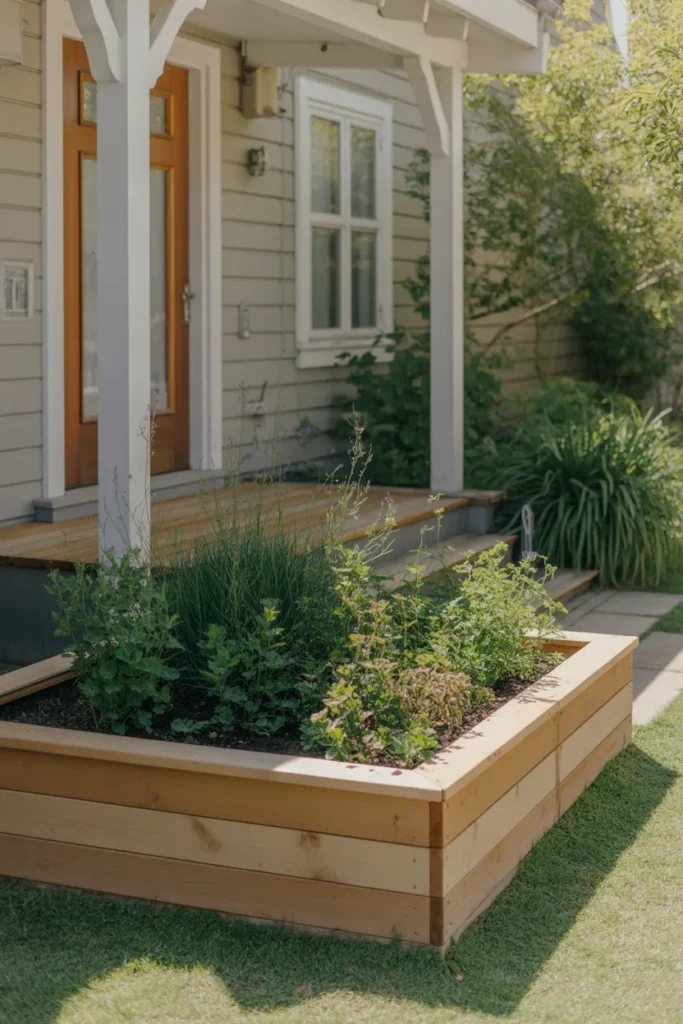
Raised wooden planter edging clearly defines planting areas. The elevated frame helps flowers stand out against the lawn. This style is ideal for showcasing seasonal blooms near the entrance. It combines functionality with strong visual impact.
16. Natural Bark Wood Edging
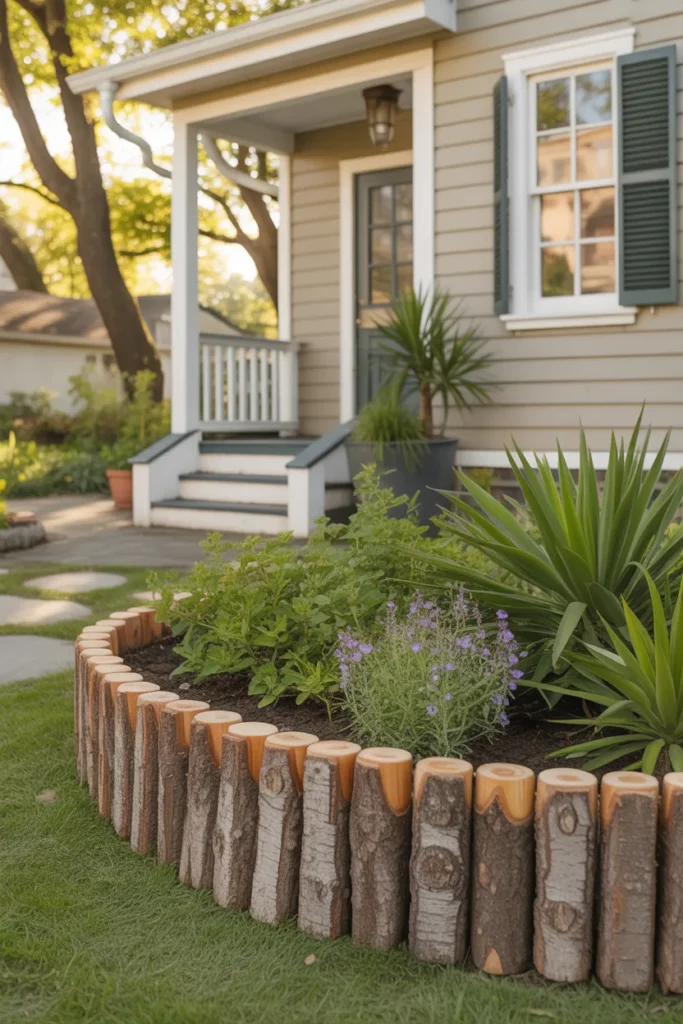
Natural bark wood edging highlights organic beauty in landscaping. The rough texture creates a rustic and earthy feel. This style blends seamlessly with shrubs and native plants. It adds warmth to the front yard without looking overly polished.
17. Stepped Wooden Border
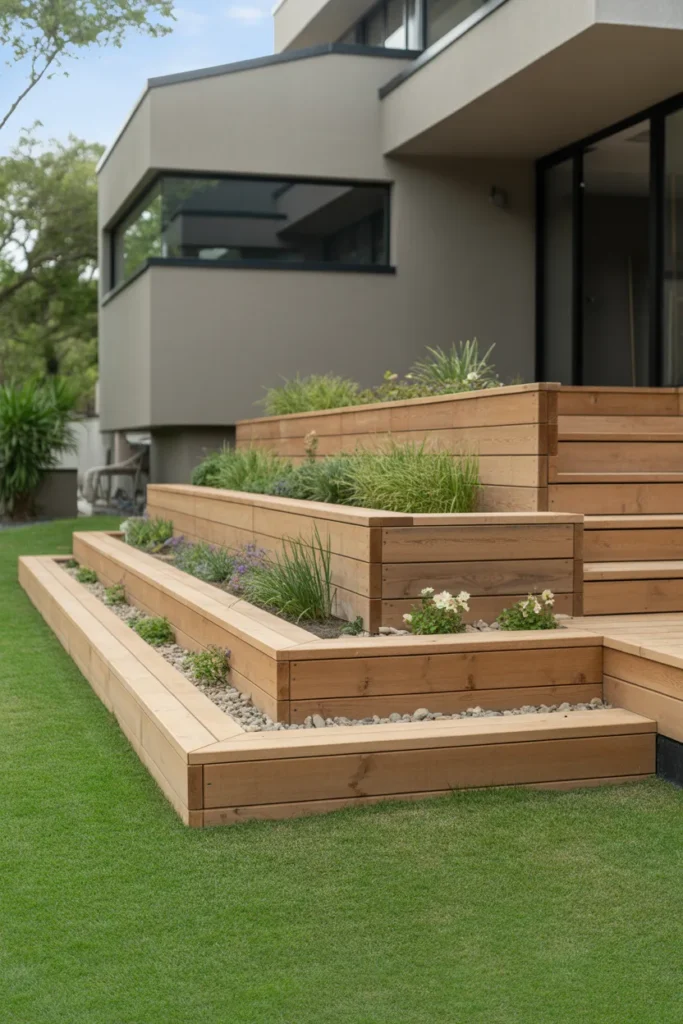
A stepped wooden border works beautifully on sloped lawns. The layered levels create structure and prevent soil movement. This design adds dimension and interest to the front yard. It keeps plants neatly framed even on uneven terrain.
18. Thin Timber Strip Edging
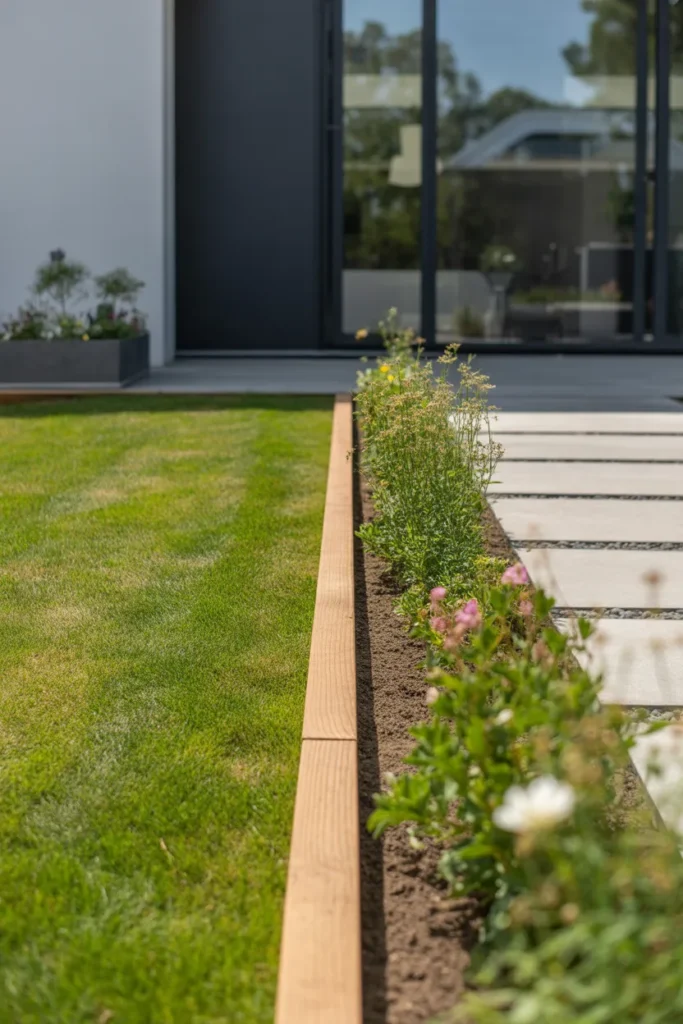
Thin timber strips provide a minimalist and subtle garden edge. The narrow profile keeps the focus on plants rather than the border. This option is perfect for modern homes with simple landscaping. It creates a crisp division between lawn and flower beds.
19. Cross-Tie Wood Edging
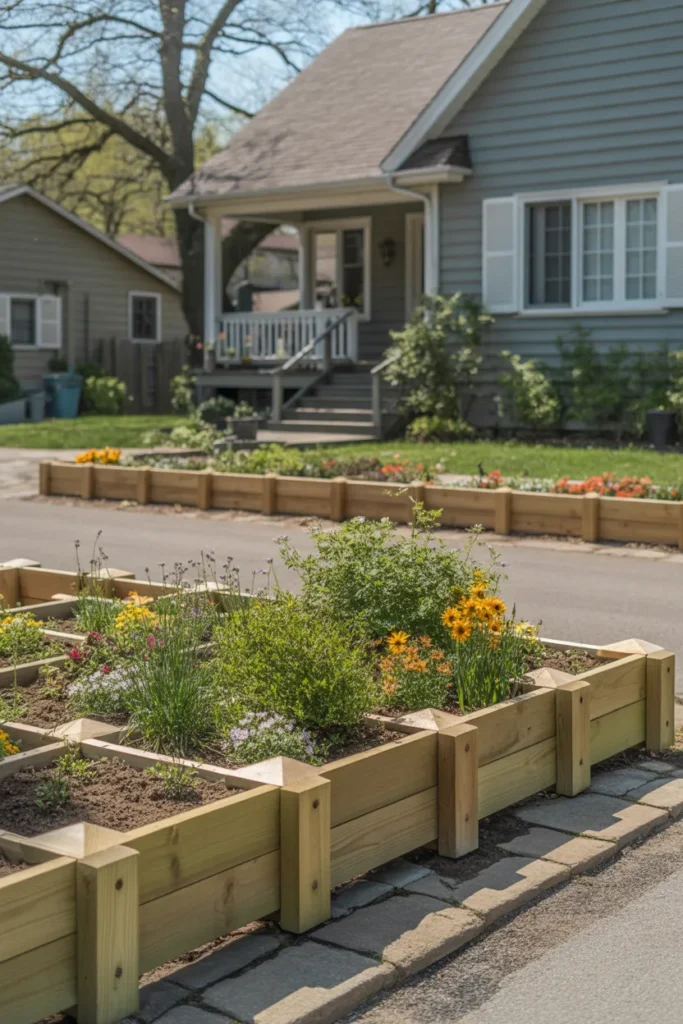
Cross-tie wood edging offers durability and strong definition. The thick wooden pieces clearly outline front yard beds. This style works especially well along driveways or property lines. It creates a bold and lasting border.
20. Decorative Carved Wood Border
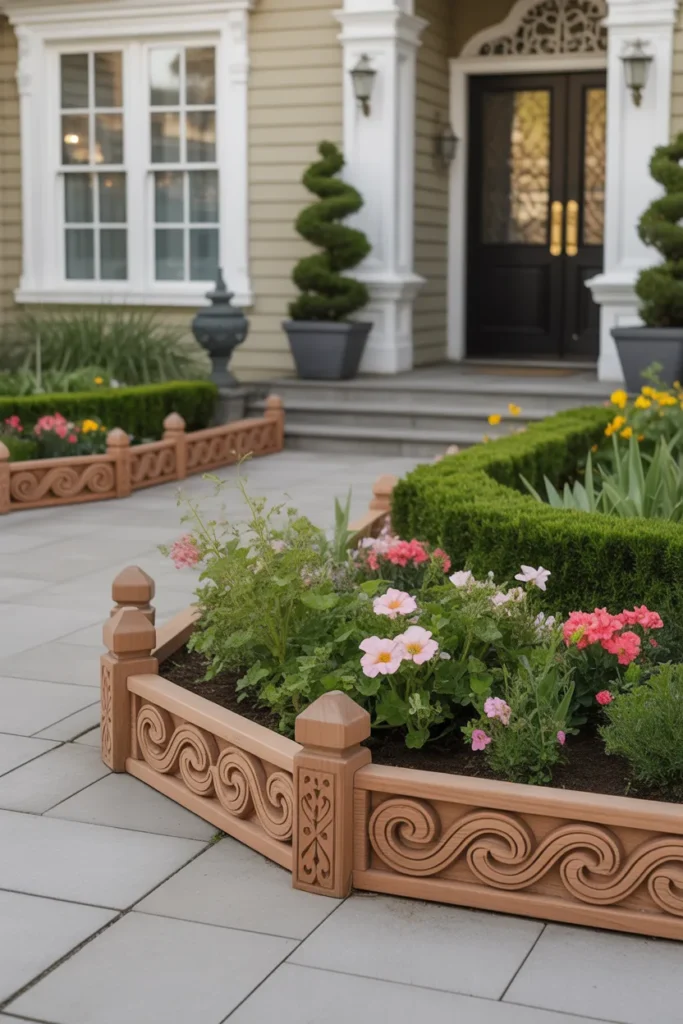
Decorative carved wood edging adds artistic detail to landscaping. The intricate patterns make flower beds stand out beautifully. This design complements traditional or vintage-style homes. It frames plants with elegance and personality.
21. Short Timber Post Border
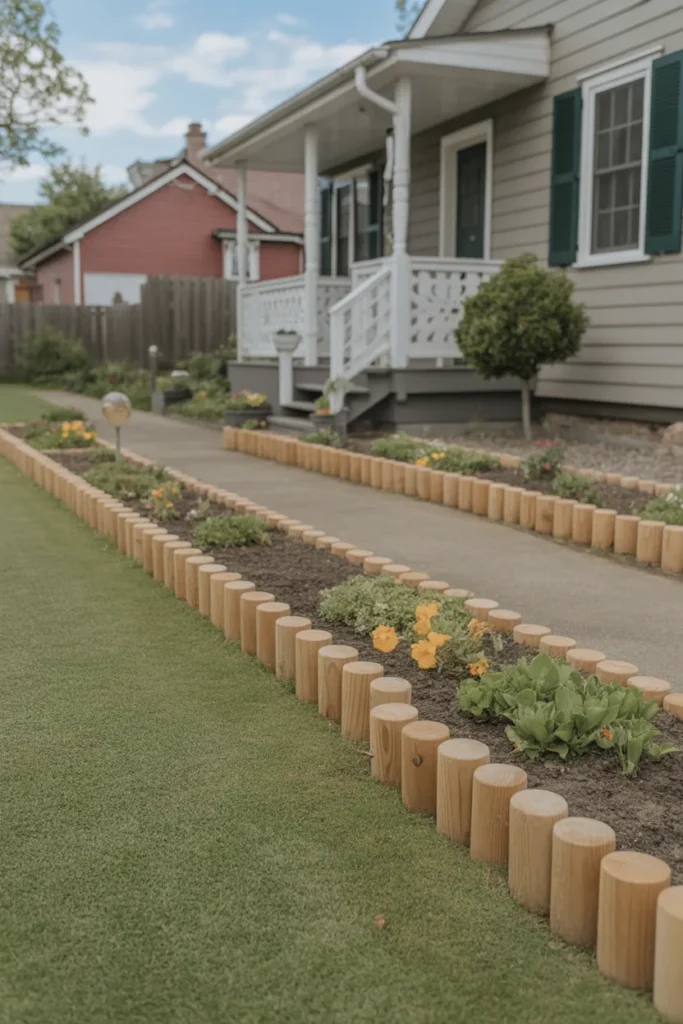
Short timber posts create a charming and structured front yard border. The evenly spaced posts clearly define planting areas without blocking the view. This style works beautifully along pathways leading to the front door. It adds texture while keeping the landscape open and inviting.
22. Angled Wood Panel Edging
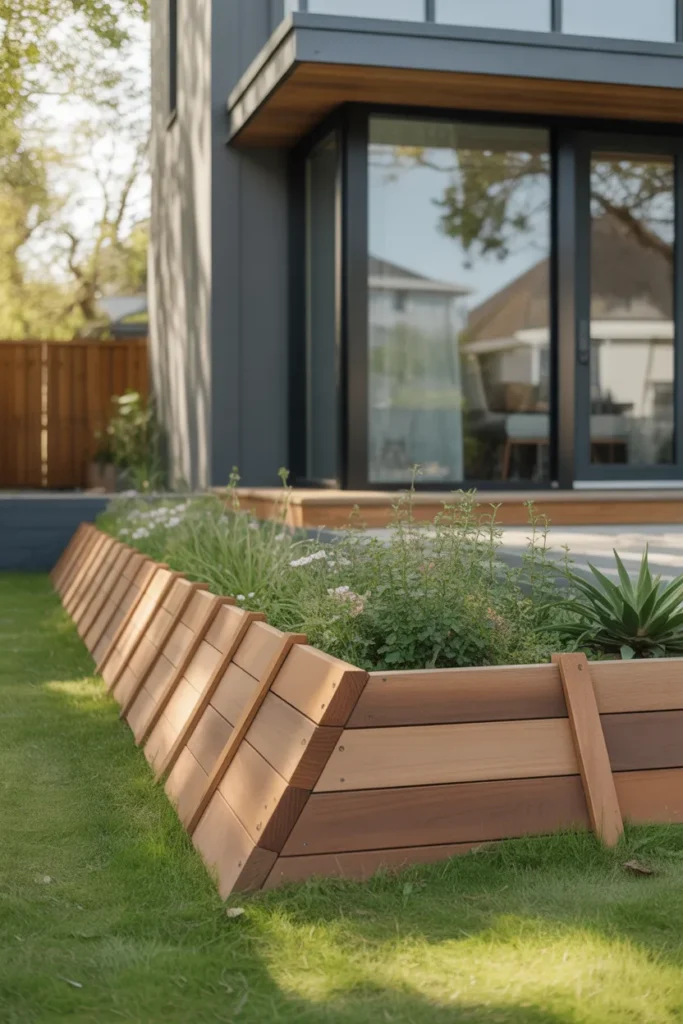
Angled wood panels introduce a modern and dynamic touch to your garden edging. The slanted design creates movement and visual interest. This option pairs well with contemporary house exteriors. It keeps flower beds neatly framed with a bold design element.
23. Split Rail Style Border
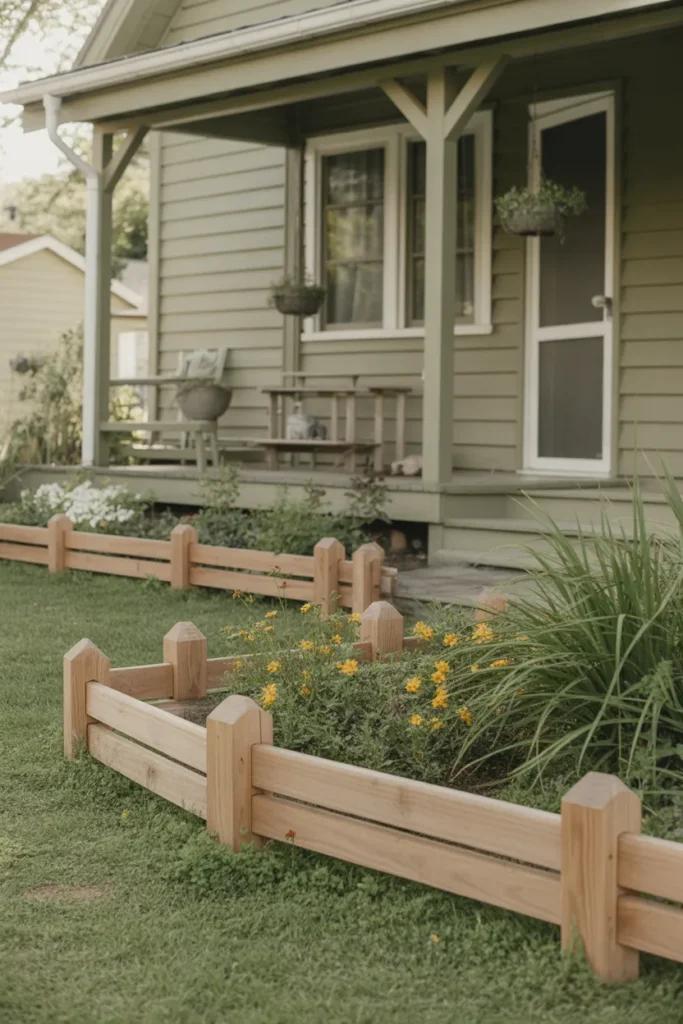
Split rail edging brings rustic charm to the front yard landscape. The simple rail design adds a farmhouse-inspired feel. This style works especially well with natural plantings and wildflowers. It creates a welcoming and relaxed atmosphere around your home.
24. Wooden Box Frame Corners
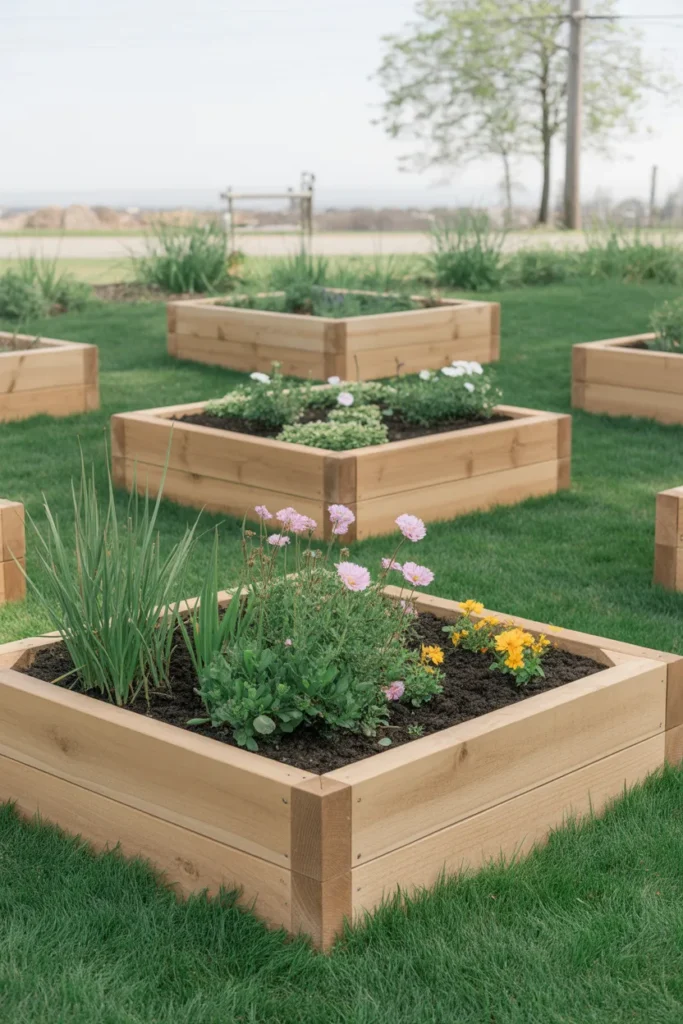
Wooden box frames add clean geometry to flower bed corners. The defined edges make landscaping look organized and intentional. This design complements modern and traditional homes alike. It helps maintain sharp lines in structured garden layouts.
25. Weathered Driftwood Edge
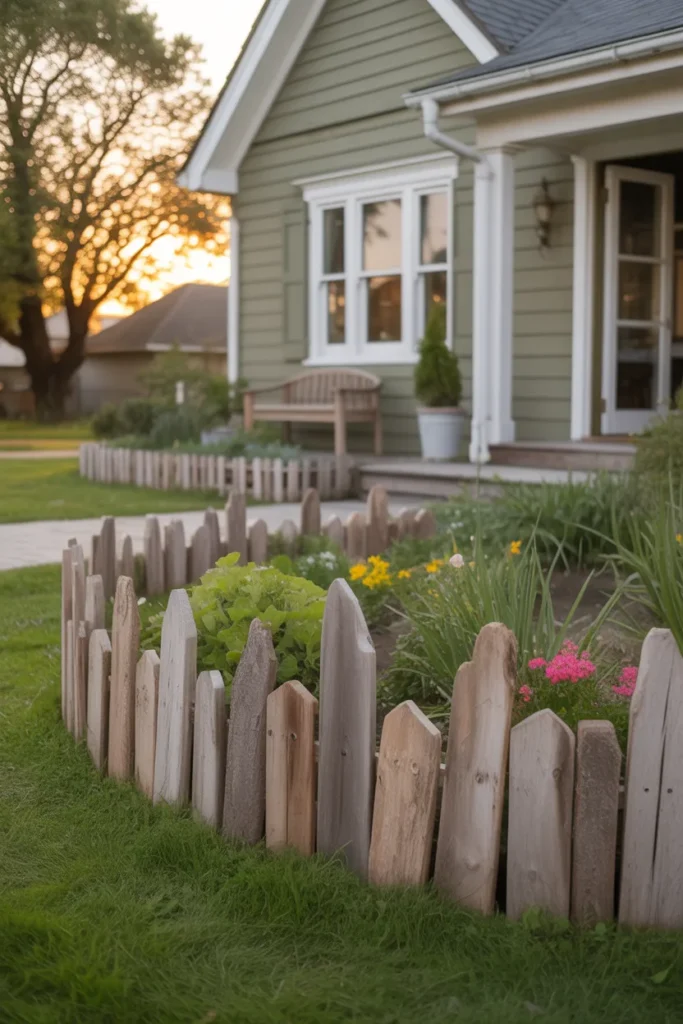
Weathered driftwood edging offers a relaxed coastal-inspired look. The natural textures blend beautifully with greenery and soft blooms. This option adds personality without appearing overly formal. It enhances curb appeal with a laid-back and artistic feel.
26. Layered Wooden Plank Border
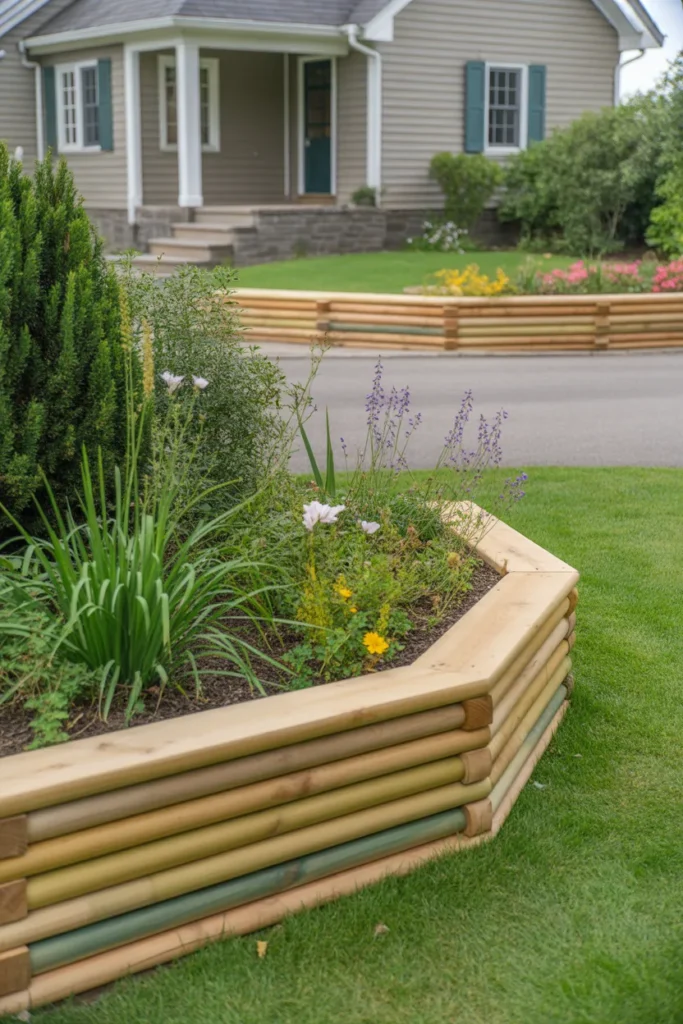
Layered planks create depth and a slightly raised appearance. The stacked design strengthens the structure of flower beds. This edging style works well for highlighting colorful plants. It delivers both durability and visual impact.
27. Zigzag Wood Edging
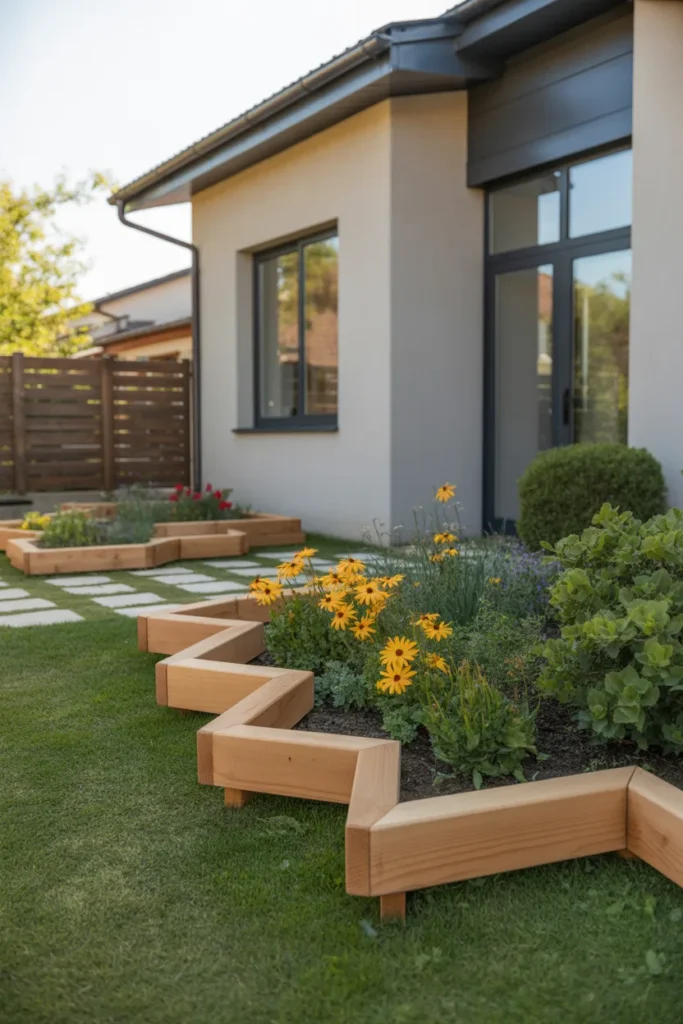
Zigzag wooden edging adds a playful and eye-catching detail. The unique pattern brings movement to the front yard landscape. This design suits homeowners who want something different yet structured. It keeps plants neatly framed while adding creativity.
28. Wood and Gravel Combination Edge
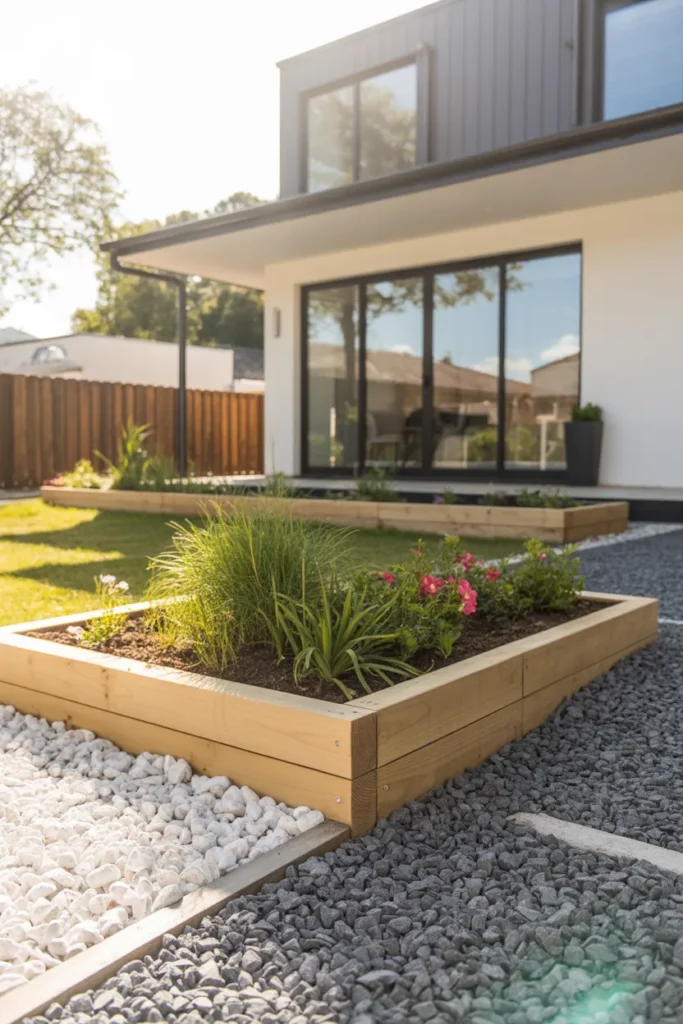
Combining wood with gravel creates a clean and modern contrast. The wooden edge keeps gravel neatly separated from grass and plants. This style works beautifully in minimalist landscapes. It enhances the overall front yard with texture and definition.
29. Low Rustic Timber Beam Border
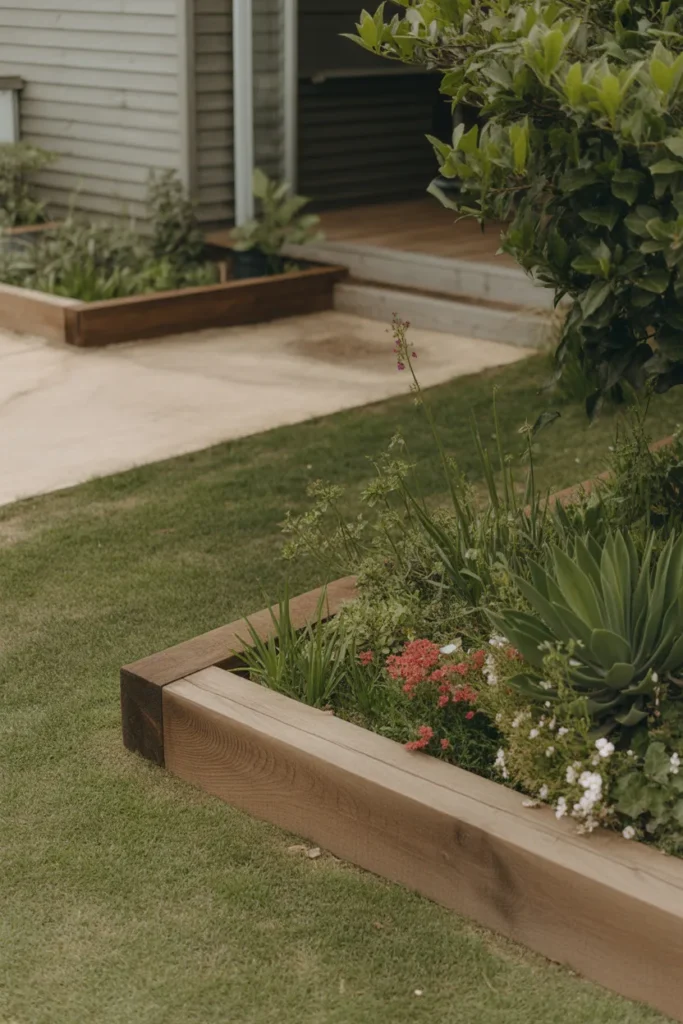
Low timber beams provide a strong yet subtle boundary. The solid wood structure makes flower beds stand out clearly. This edging works especially well along entry paths. It adds warmth and durability to the landscape design.
30. Painted Wooden Garden Border
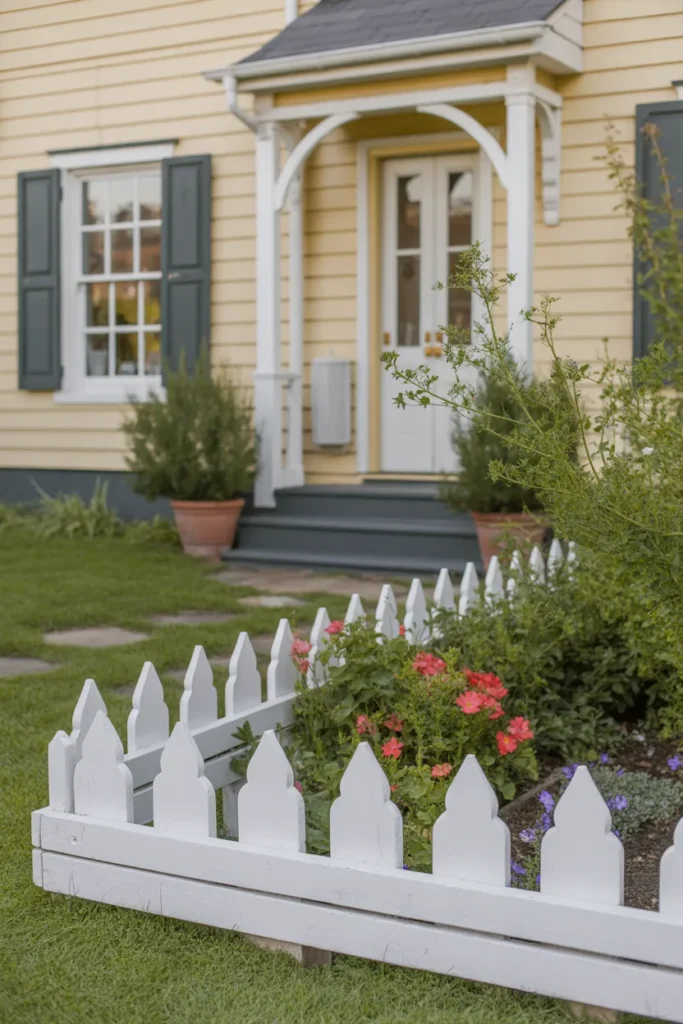
Painted wooden edging adds brightness and personality to the front yard. A white or neutral finish complements vibrant blooms beautifully. This option works well for homes with classic or coastal themes. It creates a crisp and fresh look around your plants.
31. Tall Timber Panel Edging
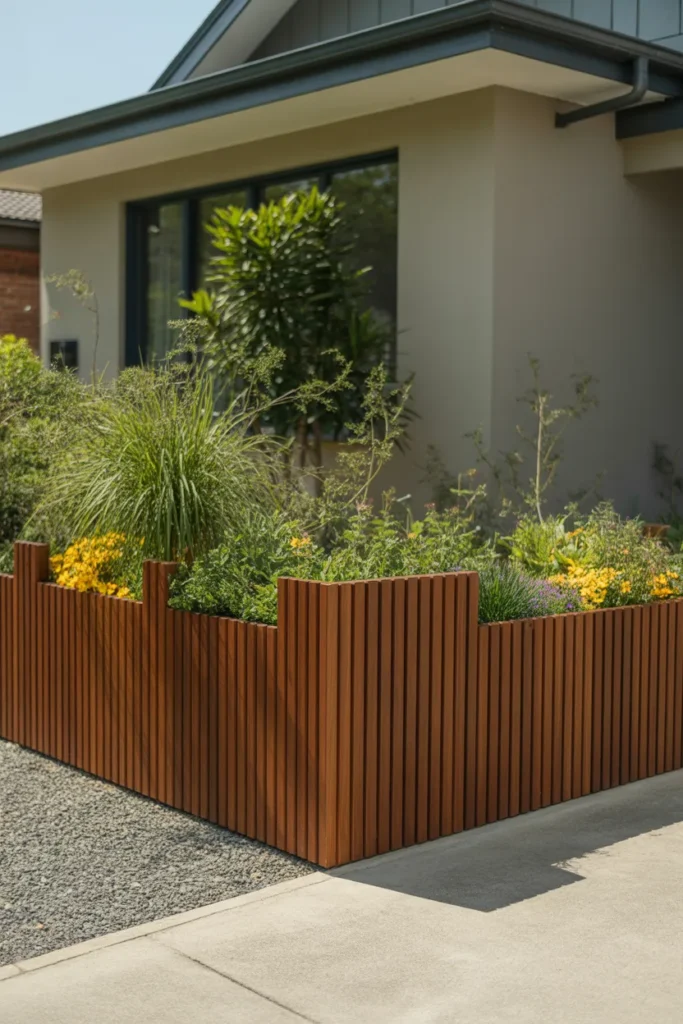
Tall timber panels create a bold and eye-catching garden edging solution. The added height helps clearly define planting areas near the front of the house. This design works beautifully for larger flower beds with layered plants. It adds privacy, structure, and strong visual impact to the landscape.
32. Rounded Wooden Beam Border
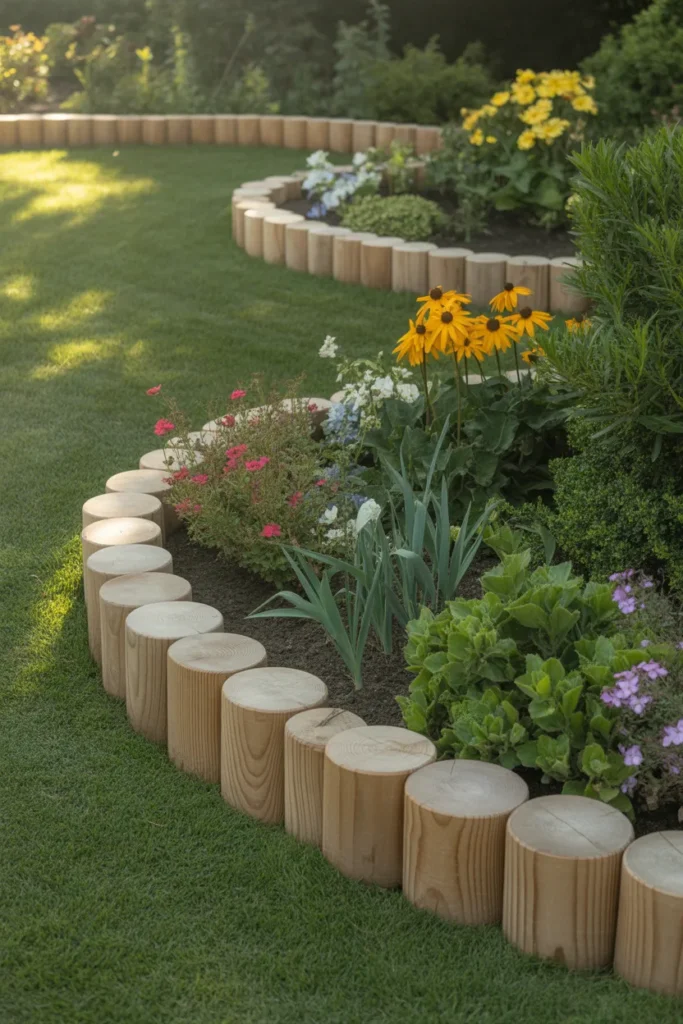
Rounded wooden beams soften the overall appearance of front yard landscaping. The smooth edges create a gentle transition between grass and plants. This style pairs well with curved walkways and organic garden layouts. It gives the home exterior a welcoming and balanced feel.
33. Wooden Peg and Rope Accent Edge
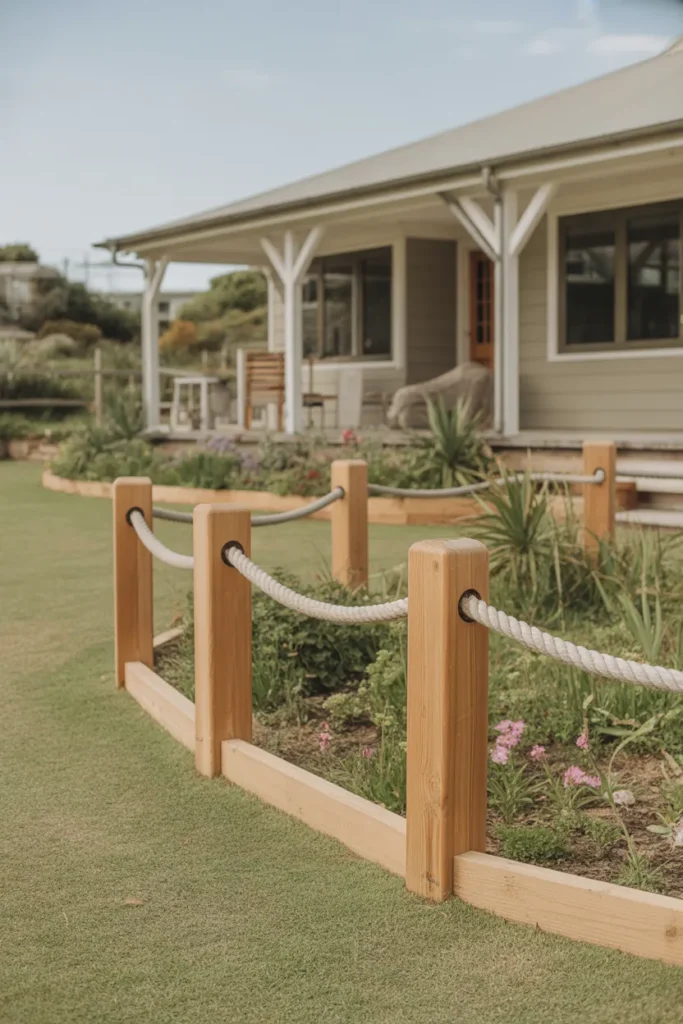
Wooden pegs connected with rope offer a decorative and nautical-inspired look. The simple design frames flower beds without feeling heavy. This edging style works well in coastal or cottage-style homes. It adds character while keeping the layout organized.
34. Minimalist Flush Wood Edging
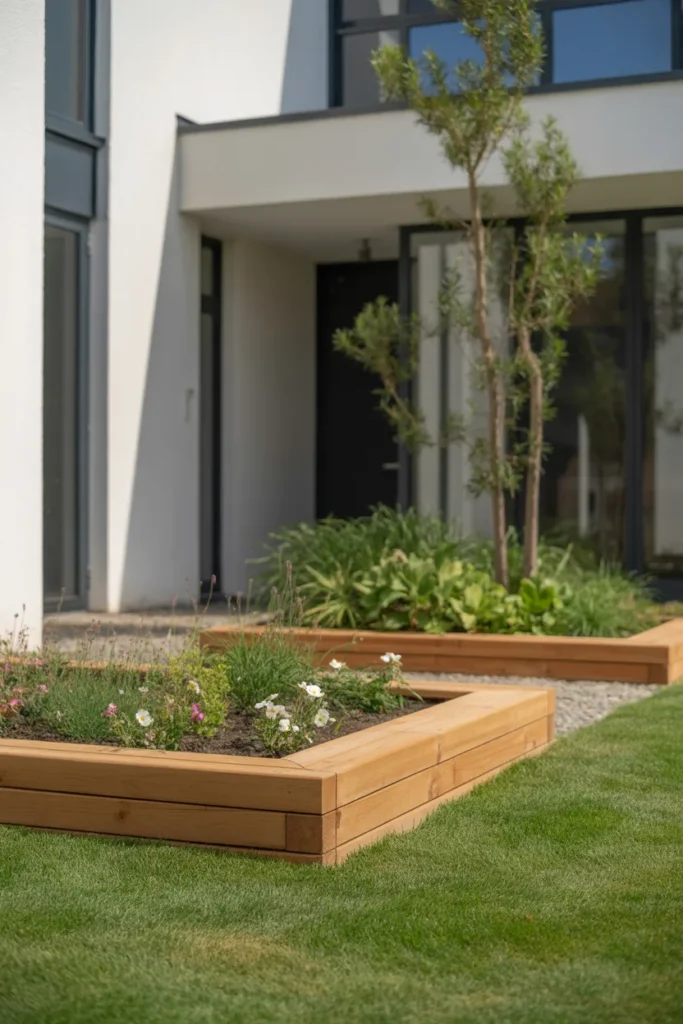
Flush wood edging sits level with the lawn for a clean appearance. The subtle border keeps attention focused on plants and flowers. This option is ideal for contemporary homes with simple landscaping. It maintains neat lines without overpowering the design.
35. Decorative Scalloped Wood Border
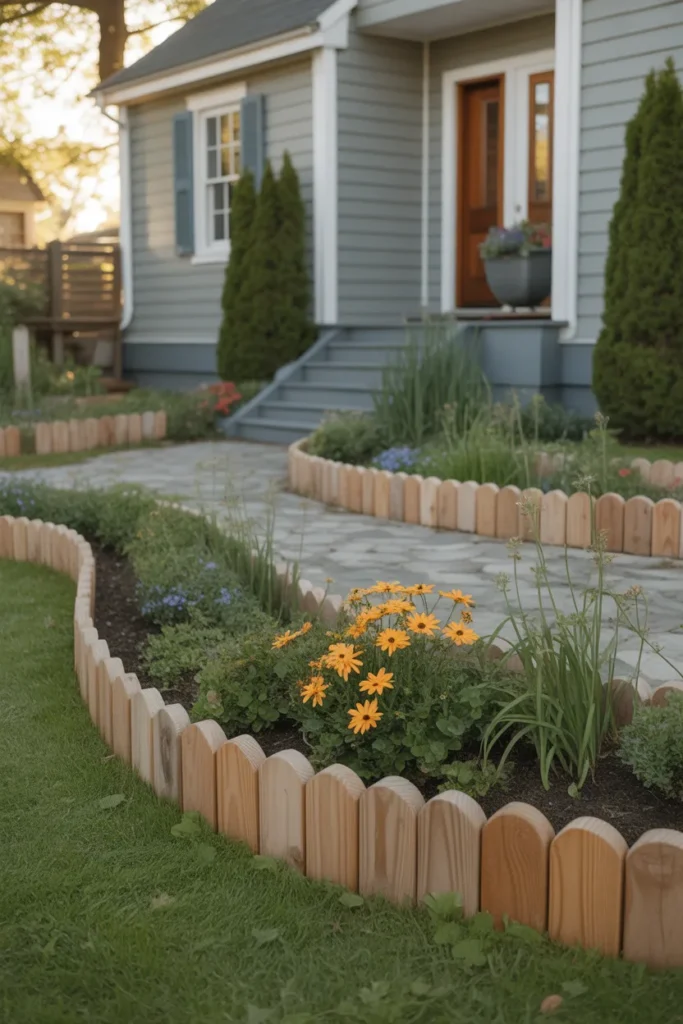
Scalloped wooden edging introduces a playful and decorative element. The curved pattern adds visual movement along flower beds. This style complements traditional and cottage-style homes beautifully. It frames plants with charm and personality.
36. Timber and Mulch Defined Edge
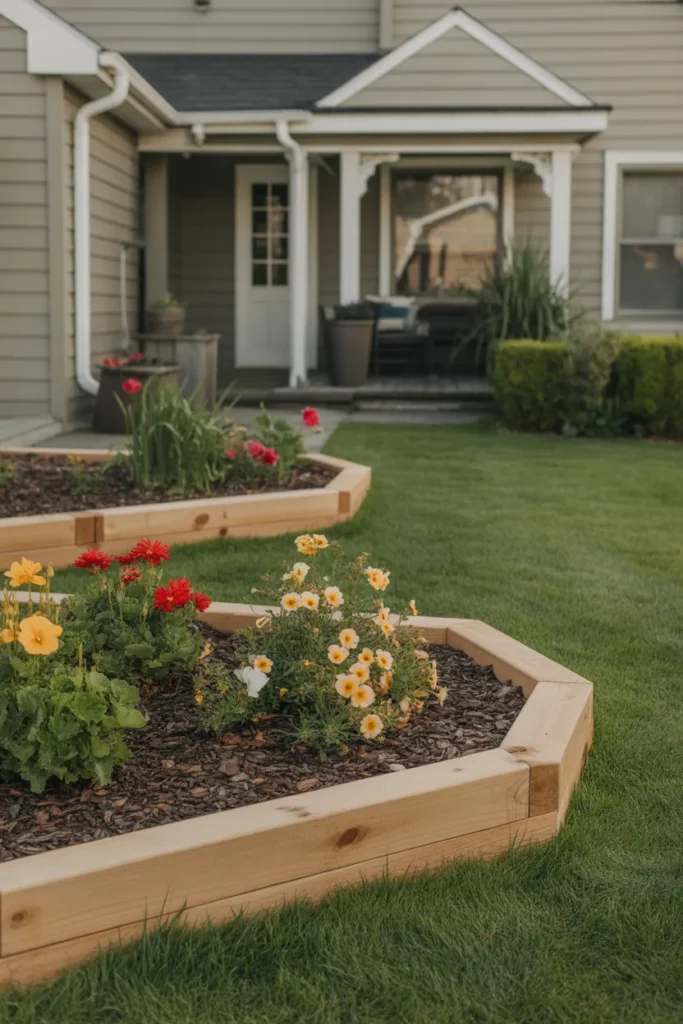
Timber edging combined with mulch creates strong contrast in the front yard. The wood border keeps mulch neatly contained within flower beds. This design improves both organization and visual appeal. It enhances plant colors while maintaining a tidy landscape.
37. Diagonal Wood Pattern Border
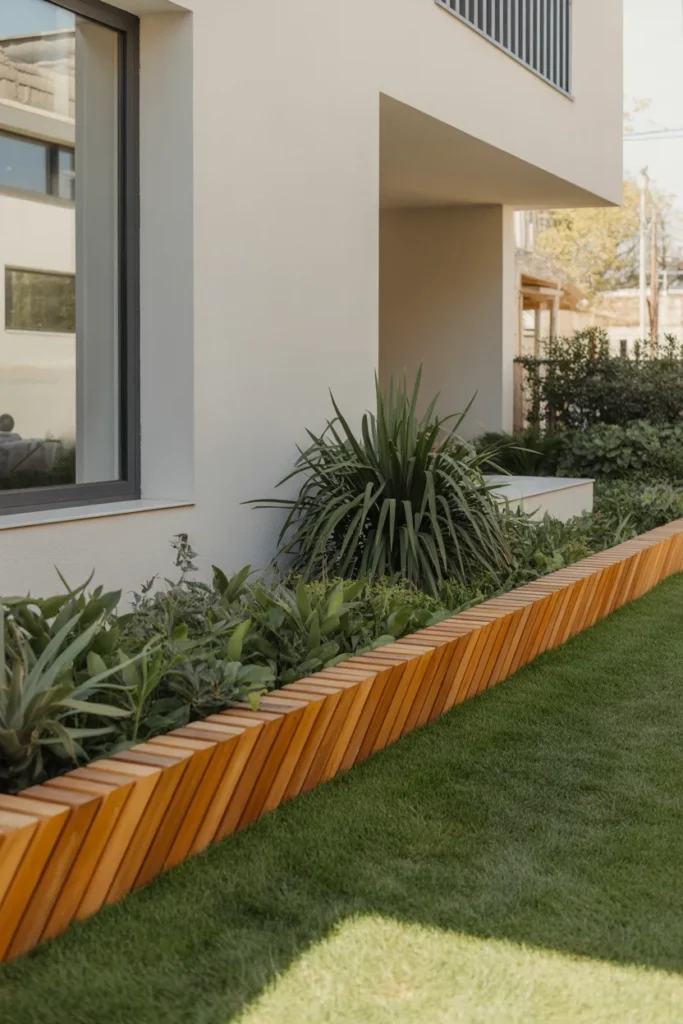
Diagonal wood patterns add a modern twist to traditional garden edging. The angled pieces create visual interest and depth. This design works well with geometric landscaping layouts. It gives the front yard a stylish and updated appearance.
38. Natural Cedar Wood Edging
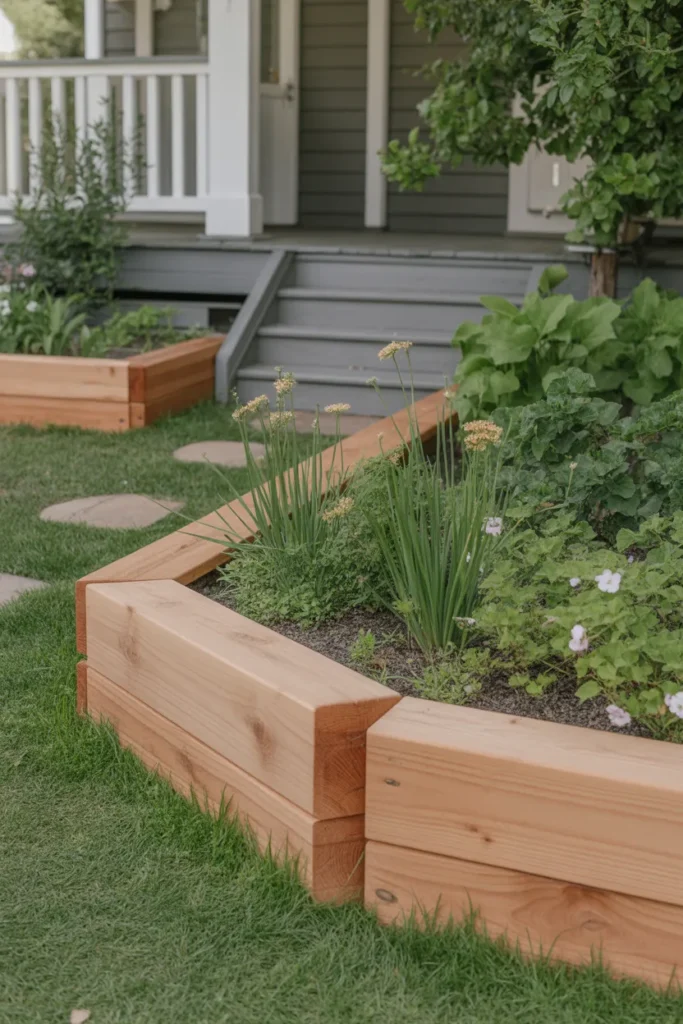
Cedar wood offers durability along with natural beauty. Its warm tone enhances both greenery and colorful blooms. This edging option works beautifully around entryways and porch gardens. It provides long-lasting structure with timeless appeal.
39. Multi-Level Wooden Frame Border
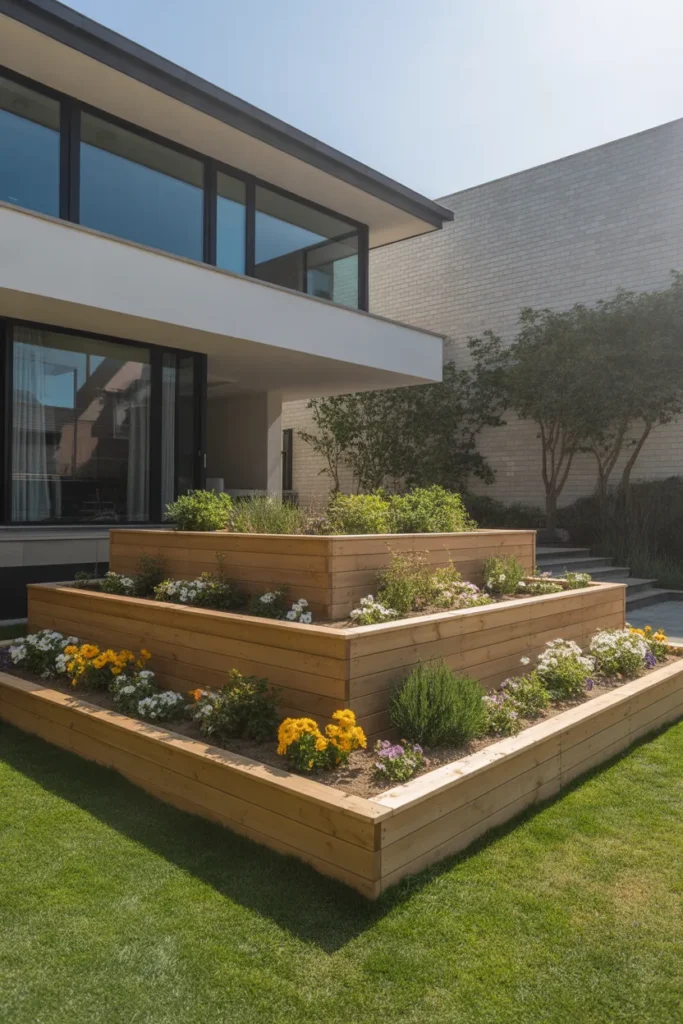
Multi-level wooden frames create dimension in the landscape. The tiered design highlights different plant heights effectively. This style works especially well in larger front yards. It adds architectural structure while keeping plants neatly framed.
40. Smooth Polished Wood Edge
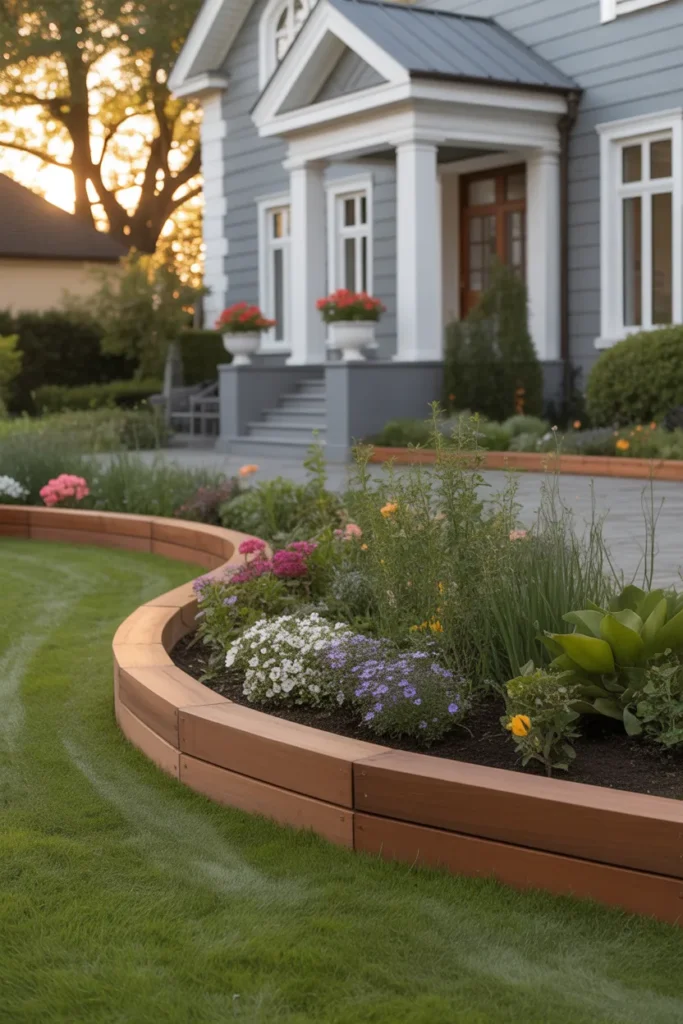
Smooth polished wood edging delivers a clean and sophisticated finish. The refined surface enhances the overall appearance of the front yard. This design pairs well with both modern and traditional home exteriors. It frames plants perfectly while elevating curb appeal.
Conclusion
The right garden edging does more than define your flower beds—it frames your plants like a picture, making colors stand out and designs feel intentional. Wooden options provide durability, flexibility, and timeless appeal, making them a favorite choice for homeowners. Whether you prefer bold timber sleepers or subtle flush borders, each style adds structure and character to your landscape.
By selecting a wooden garden edging style that complements your home’s exterior, you can instantly elevate your front yard’s appearance. Small design details often make the biggest difference in curb appeal. With thoughtful planning and the right materials, your garden edging can turn ordinary planting areas into beautifully framed outdoor features.