
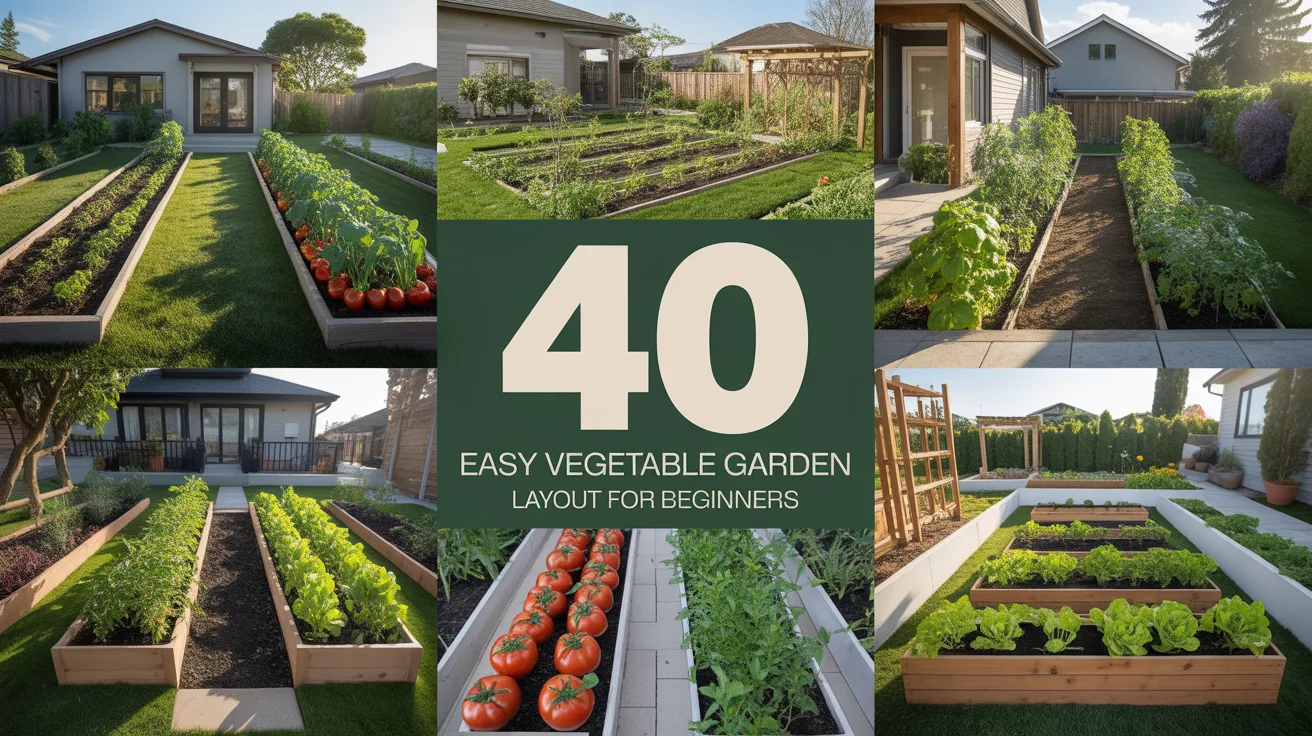
Planning your first vegetable garden layout can feel exciting and a little overwhelming at the same time. With so many design options available, beginners often struggle to choose a layout that is both practical and visually appealing. The good news is that starting simple is the best way to build confidence and grow successfully. A well-structured layout makes planting, watering, and harvesting much easier from day one.
Whether you have a spacious front yard or a small patch of land near your entrance, the right vegetable garden layout can transform your space into a productive oasis. Organized beds, clear walkways, and thoughtful plant placement help maximize sunlight and soil health. Beginner-friendly designs focus on simplicity, accessibility, and easy maintenance. With the right approach, you can enjoy fresh homegrown vegetables while enhancing your home’s curb appeal.
1. Simple Raised Bed Grid Layout
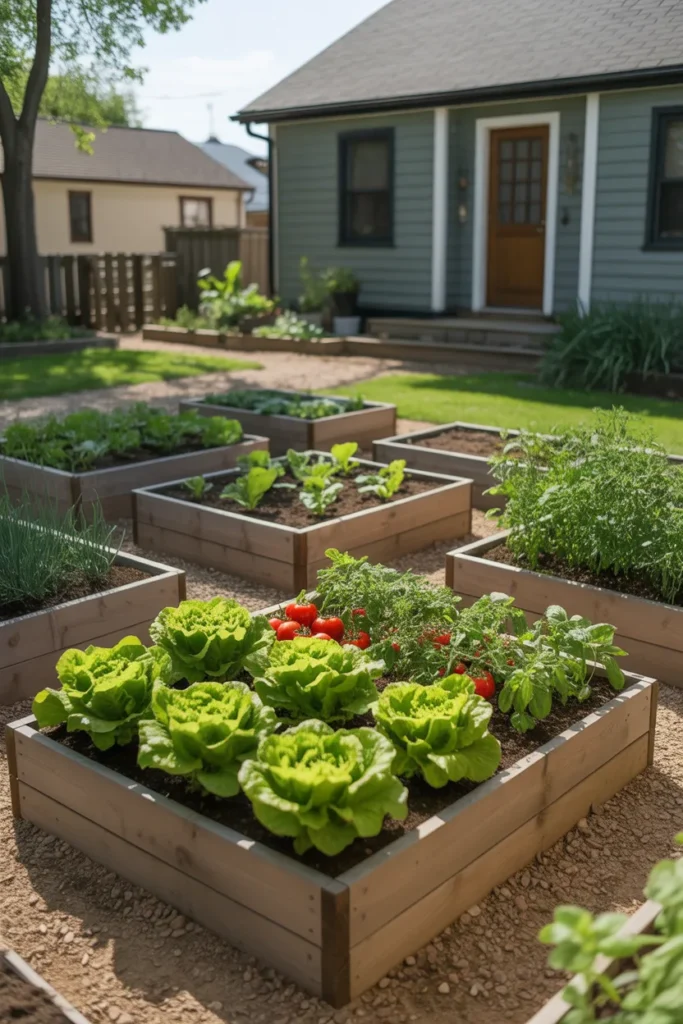
A raised bed grid vegetable garden layout is perfect for beginners who want structure and simplicity. The clean lines make planting, watering, and harvesting much easier to manage. You can divide each bed into square sections for different crops to stay organized. This layout also improves drainage and soil quality while keeping your front yard tidy.
2. Straight Row Front Yard Layout
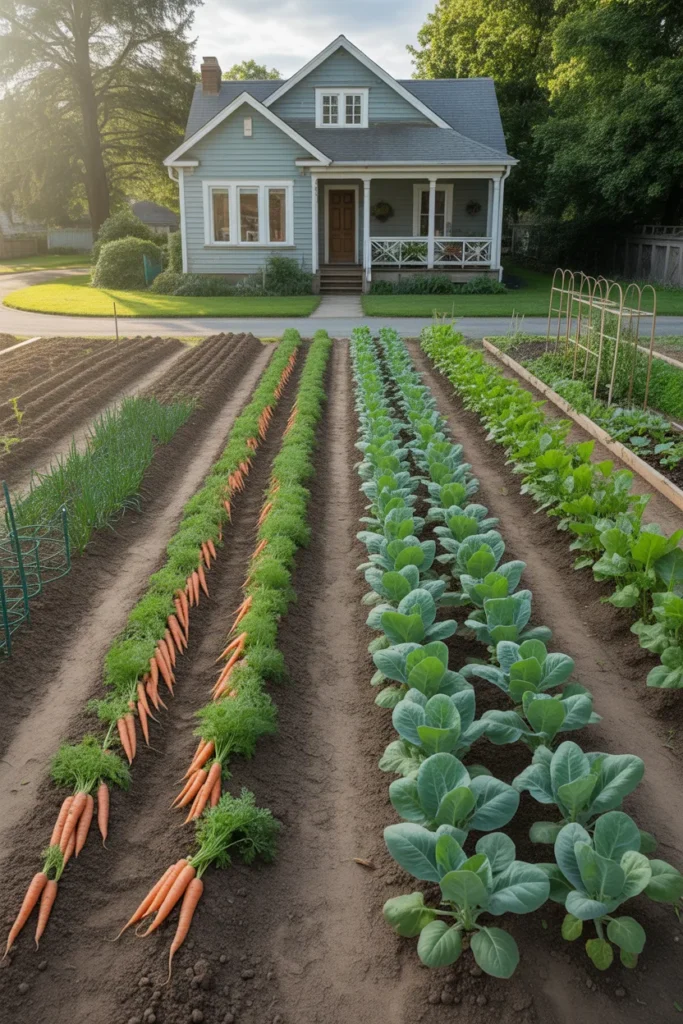
Straight rows are one of the most traditional vegetable garden layout options for beginners. They allow clear walking paths and easy access to every plant. This layout works well for larger front yards with open space. It also makes watering systems and drip lines simple to install.
3. Square Foot Garden Layout
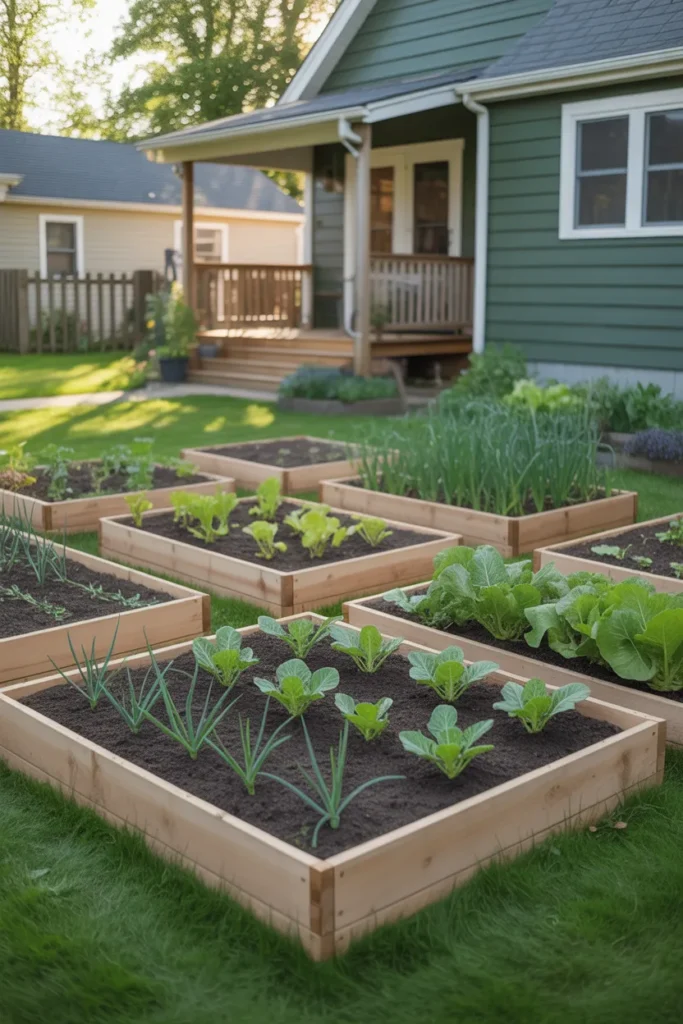
A square foot vegetable garden layout helps maximize small spaces efficiently. Each square holds a specific crop, reducing overcrowding and confusion. Beginners love this method because spacing is already planned. It also creates a visually appealing and symmetrical front yard garden.
4. U-Shaped Garden Bed Layout
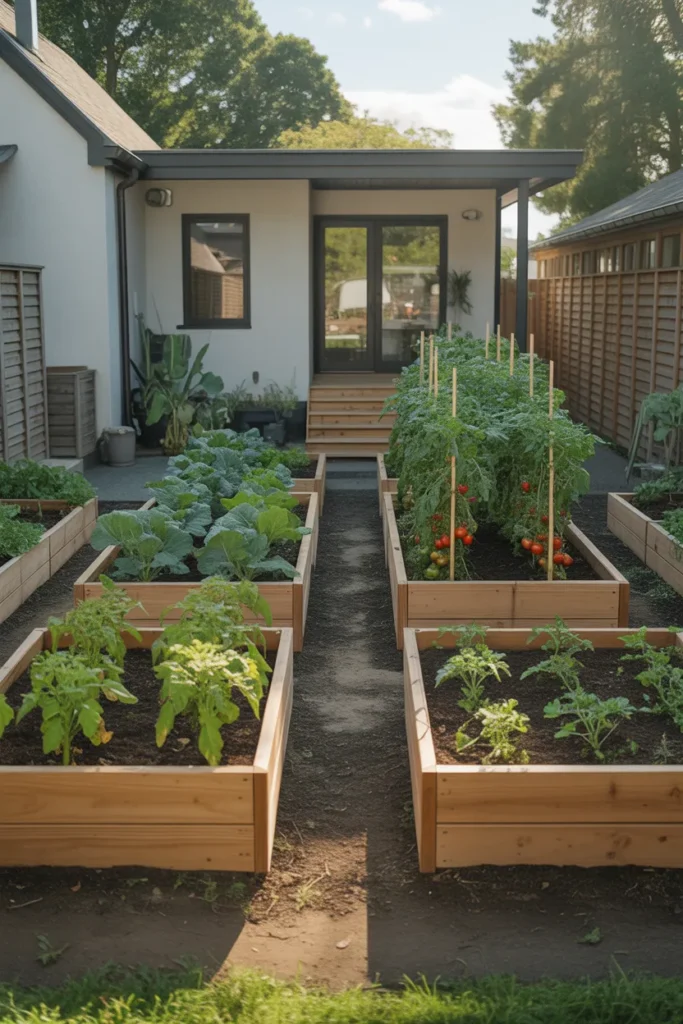
A U-shaped vegetable garden layout allows easy access from three sides. You can stand in the middle and reach all plants without stepping on soil. This setup is excellent for beginners who want comfort and convenience. It also creates a stylish design statement in the front yard.
5. Circular Keyhole Layout
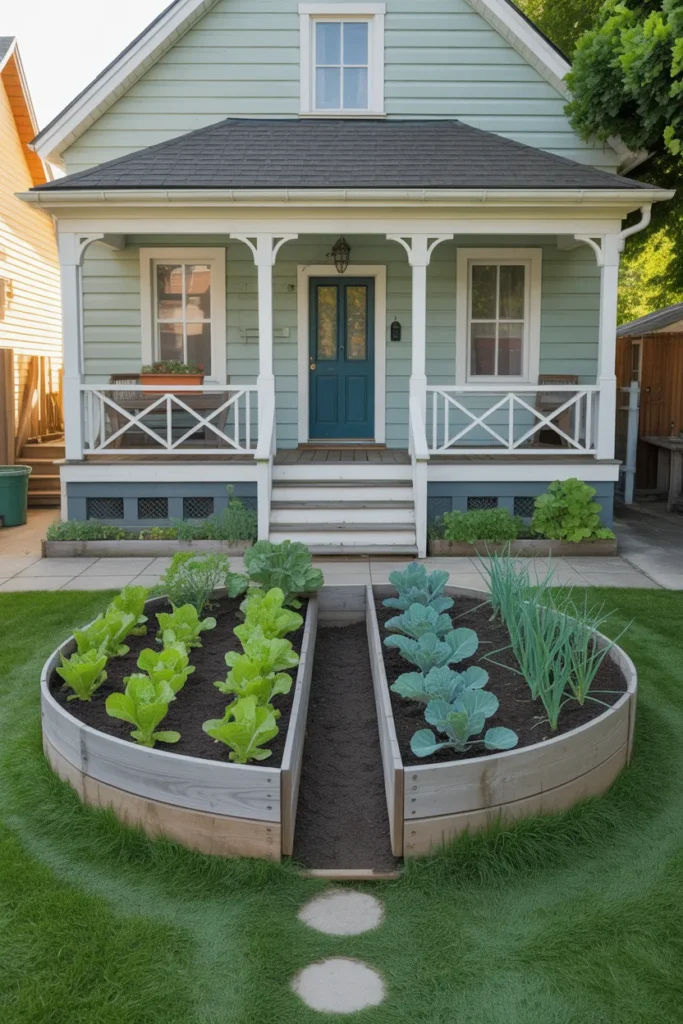
The keyhole vegetable garden layout combines beauty and practicality. The circular shape maximizes planting space while keeping access simple. A small compost section can be added in the center for natural fertilization. This layout looks unique and adds curb appeal to your home.
6. Parallel Raised Beds Layout
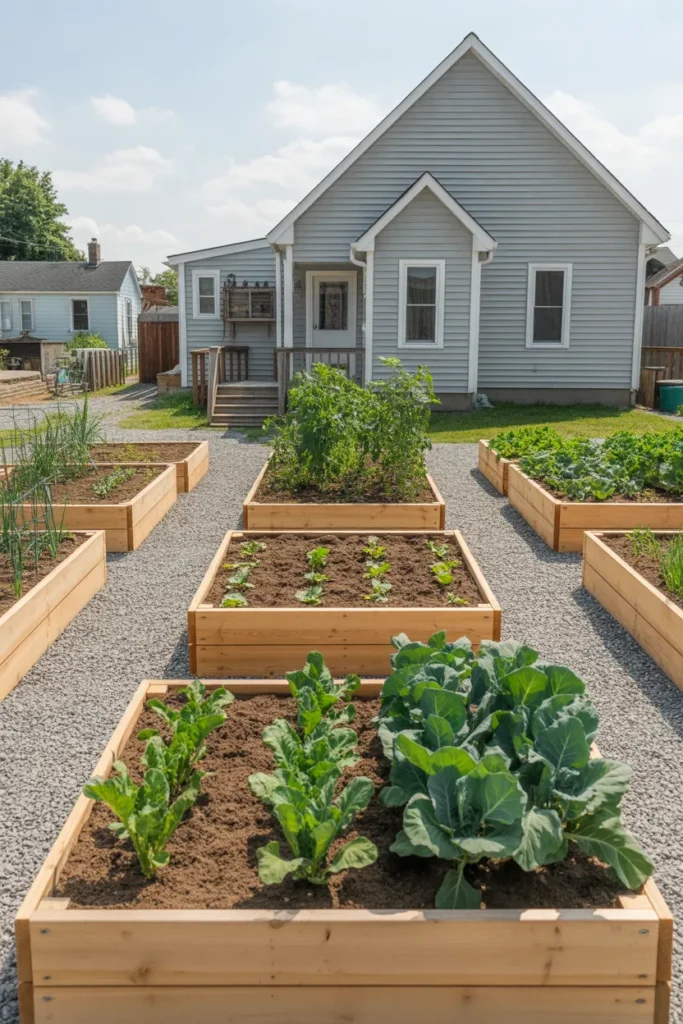
Parallel raised beds create a clean and balanced vegetable garden layout. The spacing between beds allows smooth movement and maintenance. This design works well for medium-sized front yards. It keeps everything symmetrical and visually pleasing.
7. Corner L-Shaped Layout
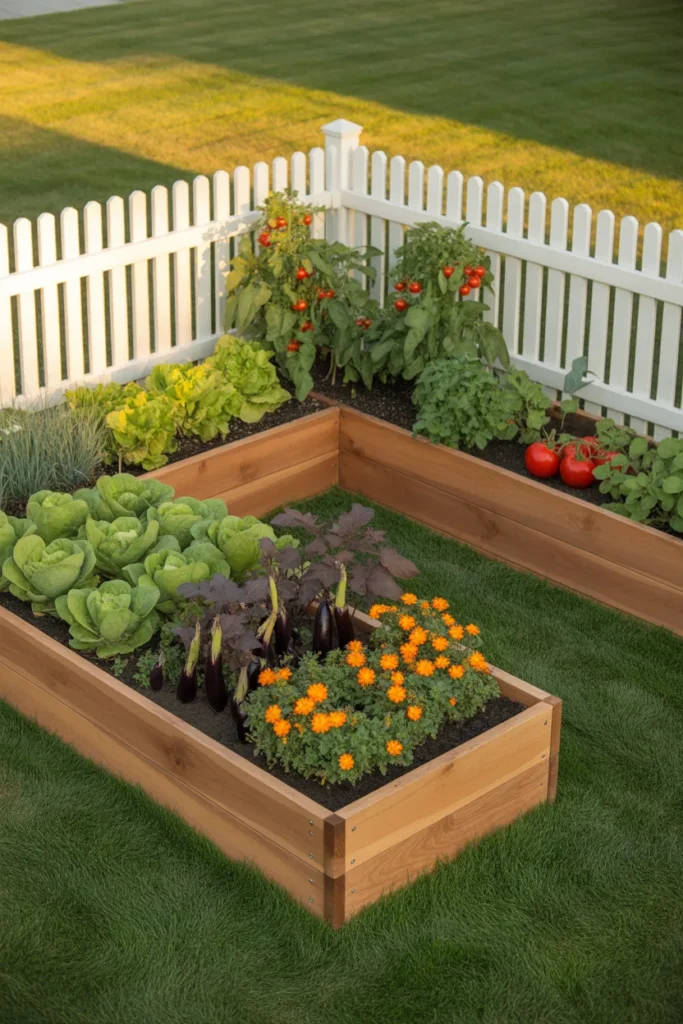
An L-shaped vegetable garden layout makes great use of unused corner spaces. It fits perfectly along fences or property edges. Beginners can separate crops along each side of the L for better organization. This layout keeps the center yard open and uncluttered.
8. Tiered Bed Layout
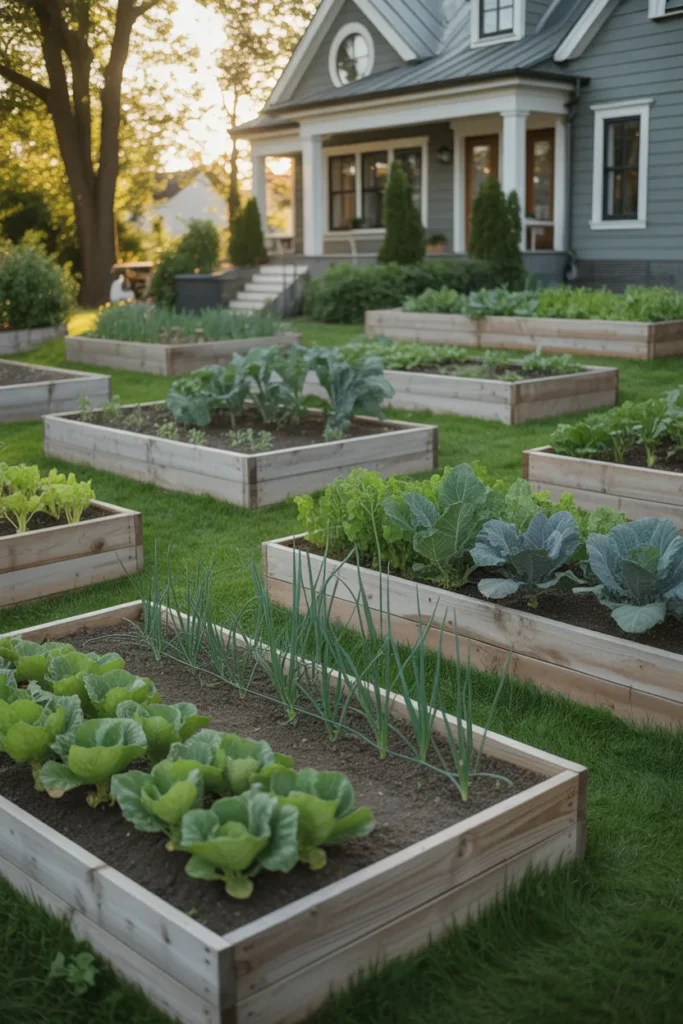
Tiered beds are ideal if your front yard has a slight slope. This vegetable garden layout prevents soil erosion and improves drainage. Each level can host different crops depending on sunlight needs. It also adds dimension and visual interest to your landscape.
9. Companion Planting Layout
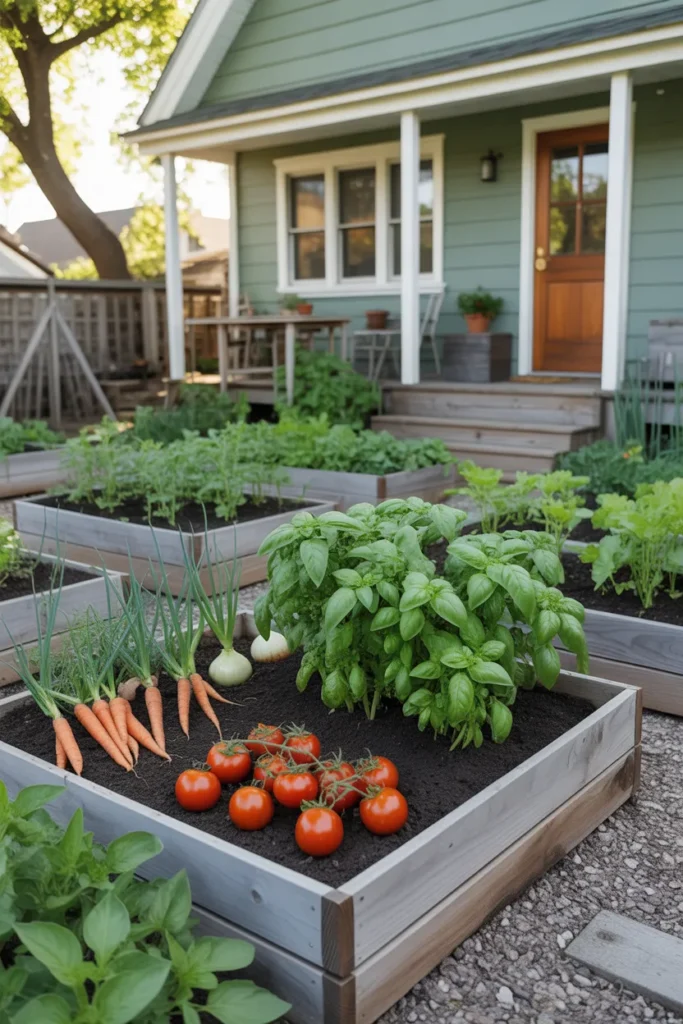
A companion planting vegetable garden layout groups plants that benefit each other. This method naturally reduces pests and improves growth. Beginners can follow simple pairings to increase success rates. It creates a healthy and productive front yard garden.
10. Container Cluster Layout
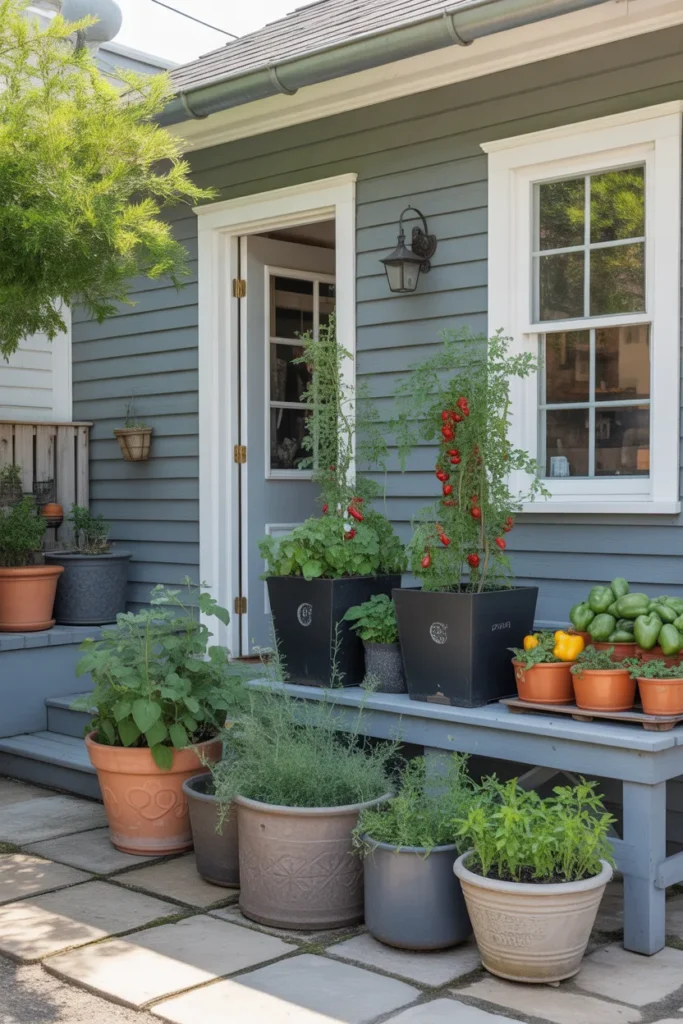
A container vegetable garden layout is perfect for very small spaces. You can move pots around to follow sunlight throughout the day. It requires less heavy digging and is easy to maintain. This layout keeps your front yard flexible and beginner-friendly.
11. Vertical Trellis Layout
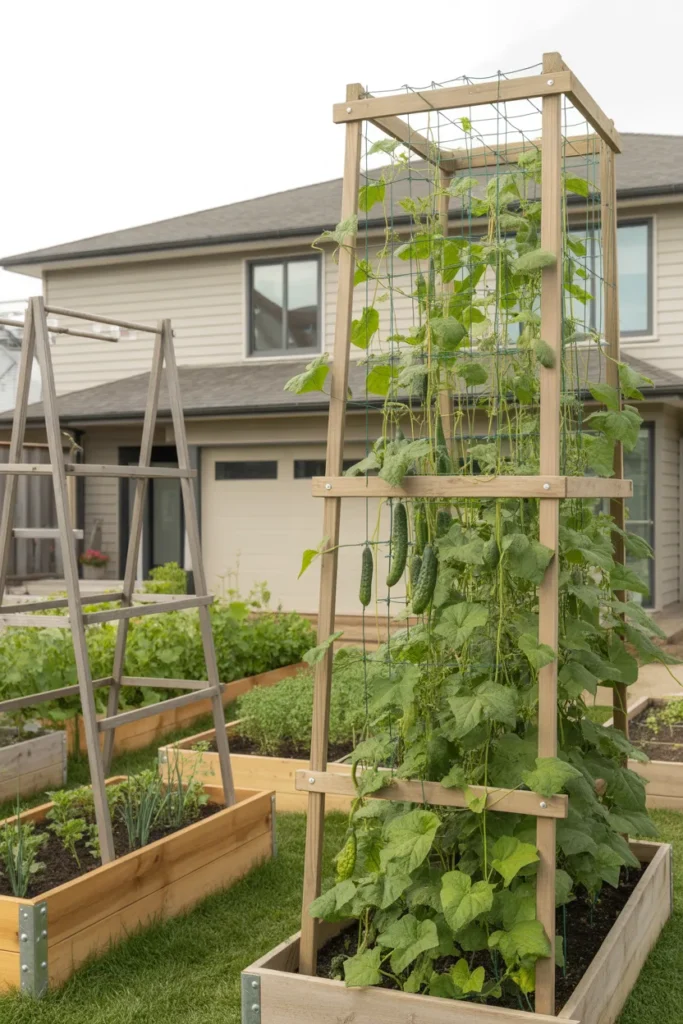
A vertical trellis vegetable garden layout is ideal for saving space in smaller front yards. Climbing vegetables grow upward instead of spreading across the ground. This improves air circulation and reduces common plant diseases. It also creates a lush green wall effect that enhances curb appeal.
12. Four-Quadrant Layout
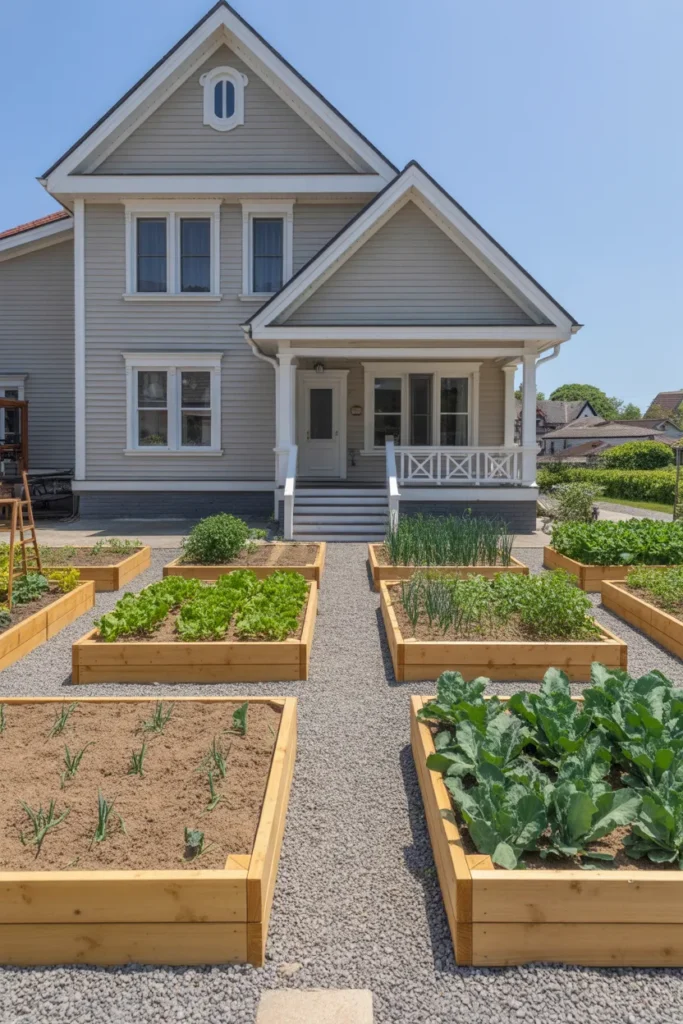
The four-quadrant vegetable garden layout keeps crops neatly separated. Each section can be assigned to leafy greens, root vegetables, herbs, or fruiting plants. The cross pathway allows easy access without stepping on soil. This design feels balanced and organized for beginners.
13. Border Garden Layout
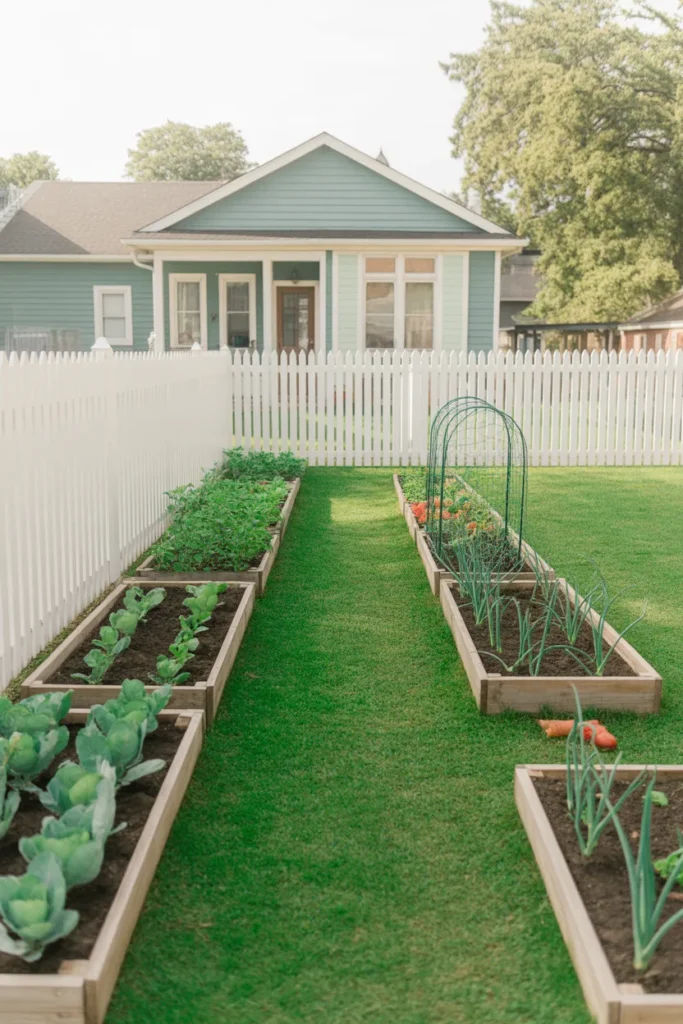
A border vegetable garden layout uses the edges of your front yard efficiently. Vegetables grow neatly along fences or walkways. This keeps the central lawn area open and spacious. It is a simple and attractive way to start gardening.
14. Mixed Bed Layout
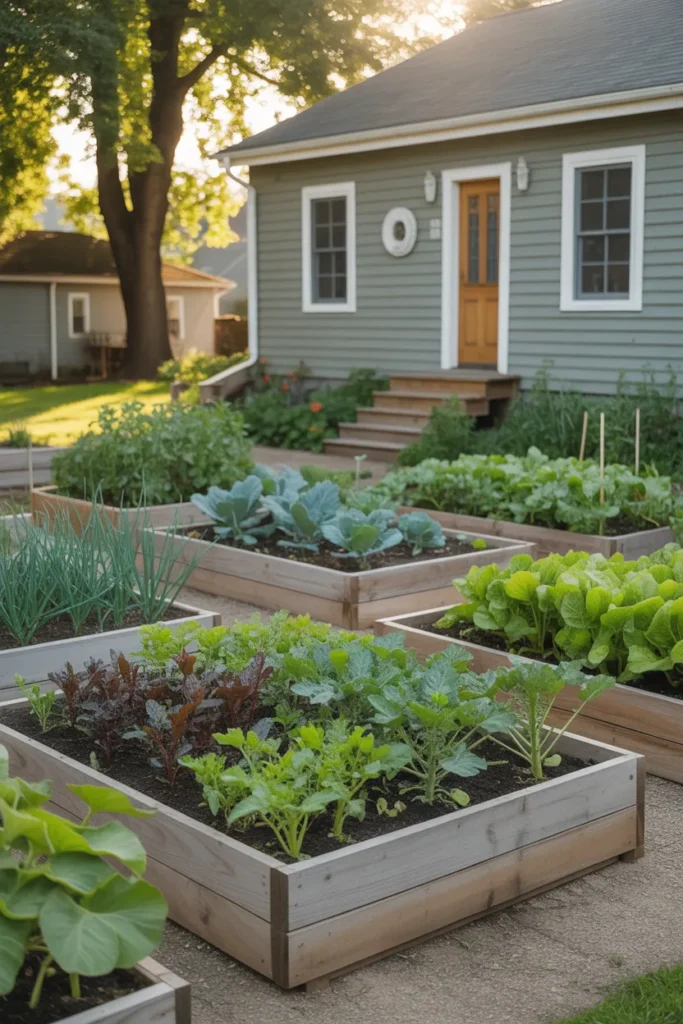
The mixed bed vegetable garden layout combines several crops in one bed. This method makes efficient use of available space. It also helps create natural shade and soil balance between plants. Beginners enjoy the flexibility and lively appearance of this design.
15. Pathway Grid Layout
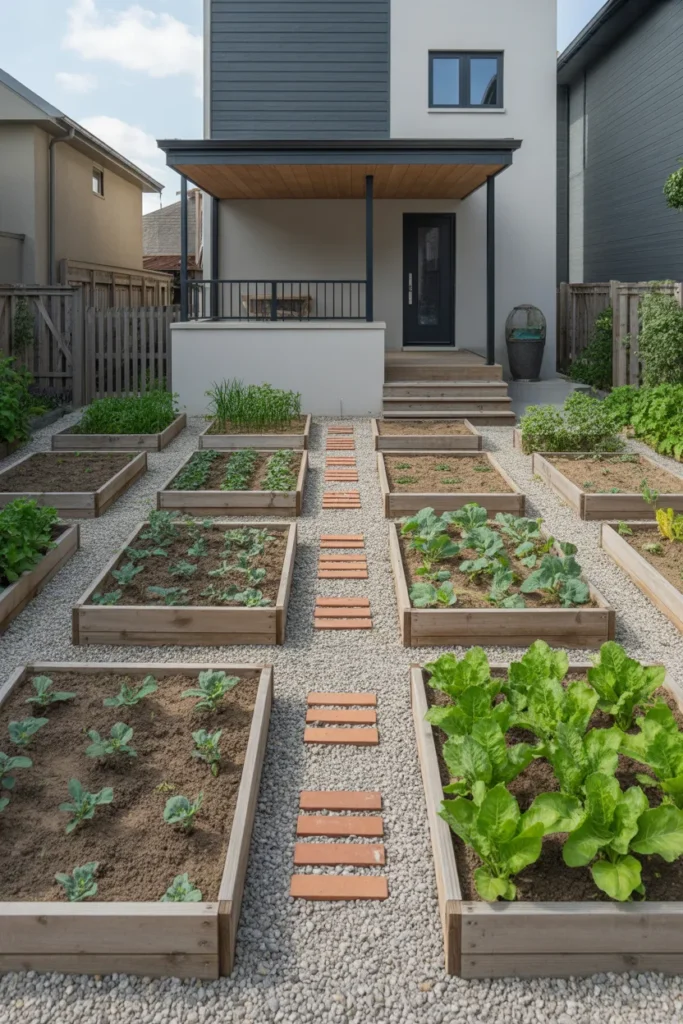
A pathway grid vegetable garden layout prioritizes accessibility. Clearly defined walkways keep soil from becoming compacted. You can reach every plant without difficulty. This structure makes watering and harvesting more comfortable.
16. Sun-Oriented Layout
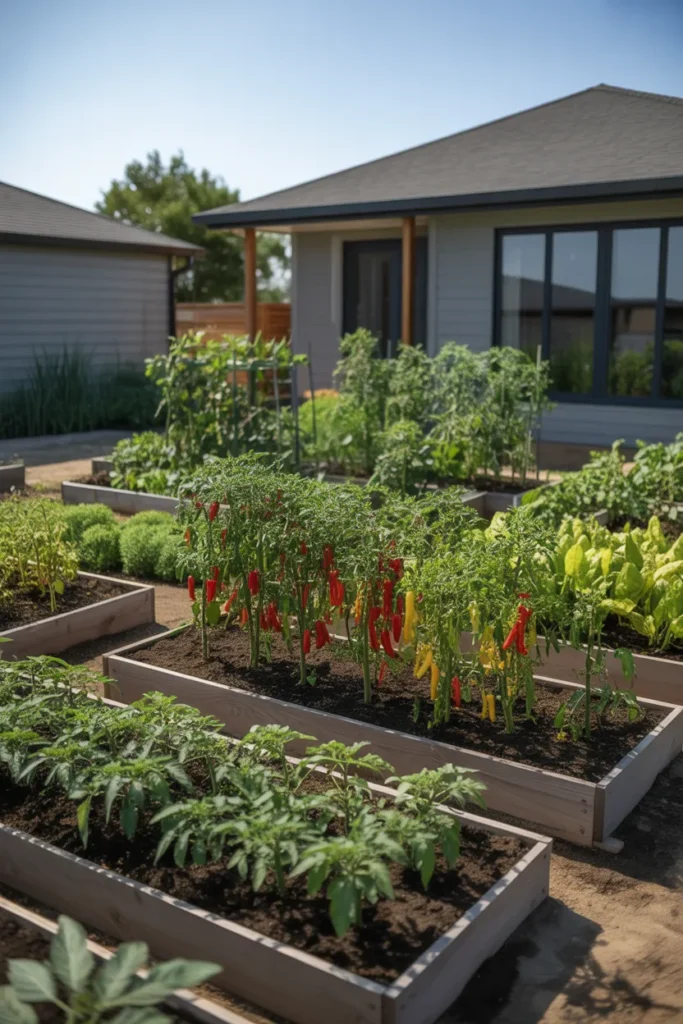
A sun-oriented vegetable garden layout ensures every plant receives maximum light. Beds are positioned based on daily sun movement. Taller crops are placed behind shorter ones to avoid shading. This thoughtful setup increases productivity for beginners.
17. Minimalist Modern Layout
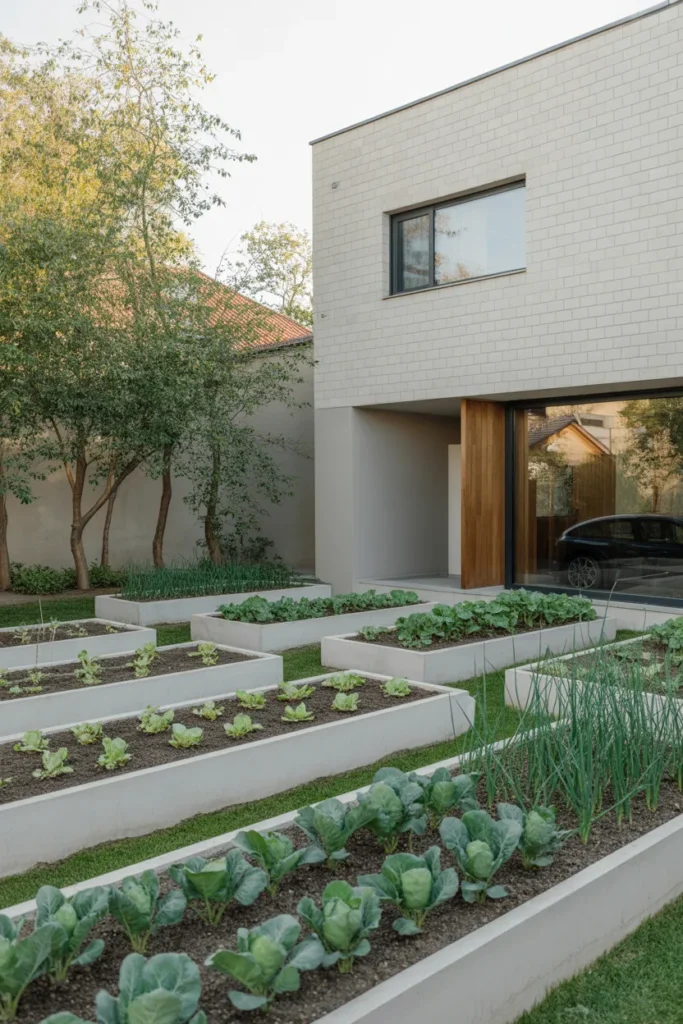
A minimalist vegetable garden layout focuses on simplicity and clean design. Beds are arranged in straight lines with limited crop variety. This makes maintenance less overwhelming for beginners. The neat aesthetic blends beautifully with modern homes.
18. Fence-Supported Layout
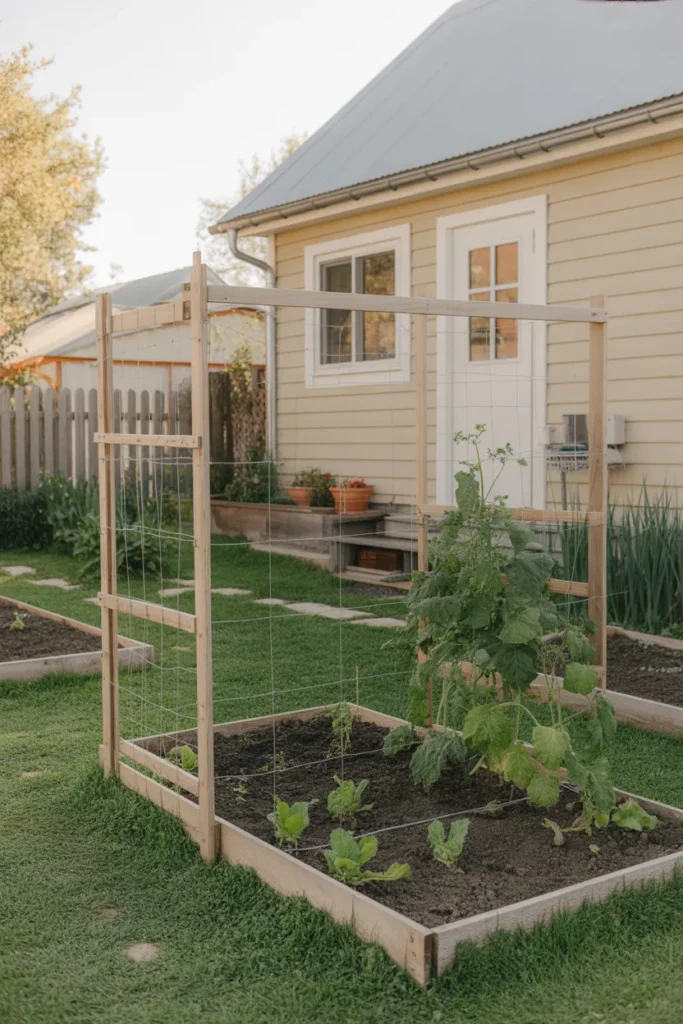
A fence-supported vegetable garden layout uses vertical space wisely. Climbing vegetables can attach directly to fence panels. This reduces the need for additional structures. It keeps your front yard organized and space-efficient.
19. Small Patch Starter Layout
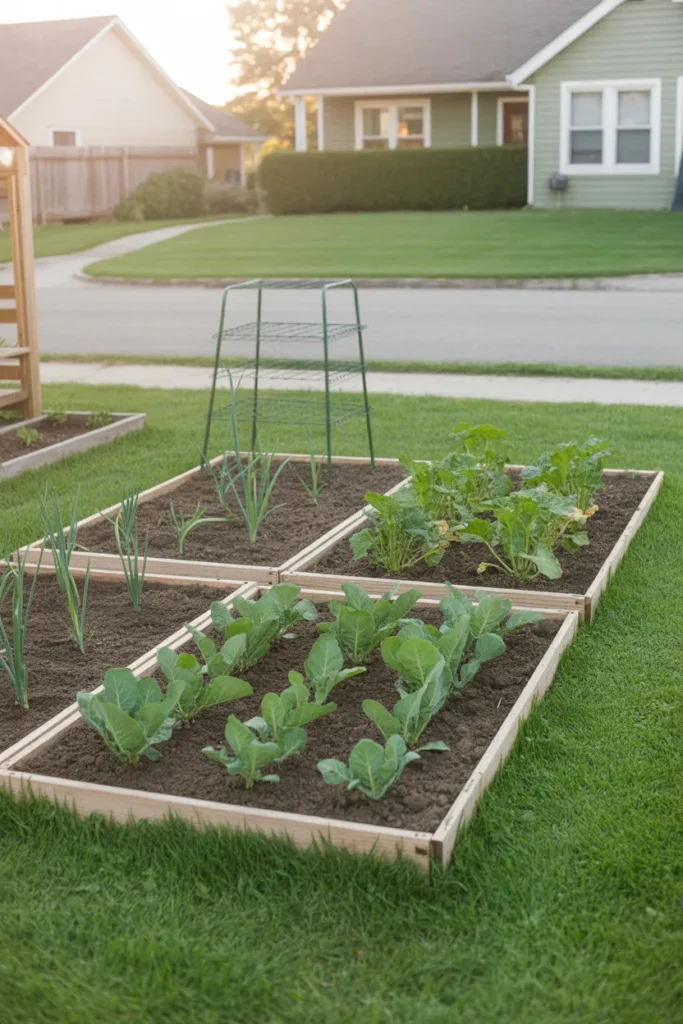
A small patch vegetable garden layout is perfect for first-time gardeners. It requires minimal tools and preparation. You can start with a few easy crops like lettuce and radishes. This manageable size builds confidence without overwhelming effort.
20. Symmetrical Front Entry Layout
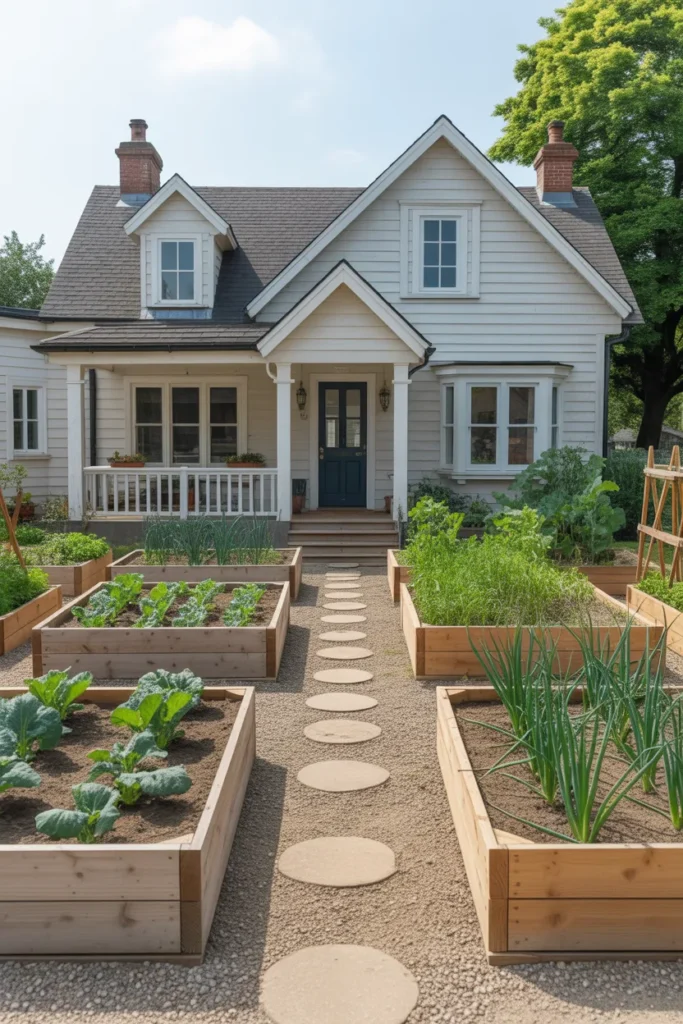
A symmetrical vegetable garden layout frames your home entrance beautifully. Matching beds on both sides create balance and structure. It adds visual charm while staying practical. Beginners appreciate the organized and welcoming appearance.
21. Backyard-to-Front Transition Layout
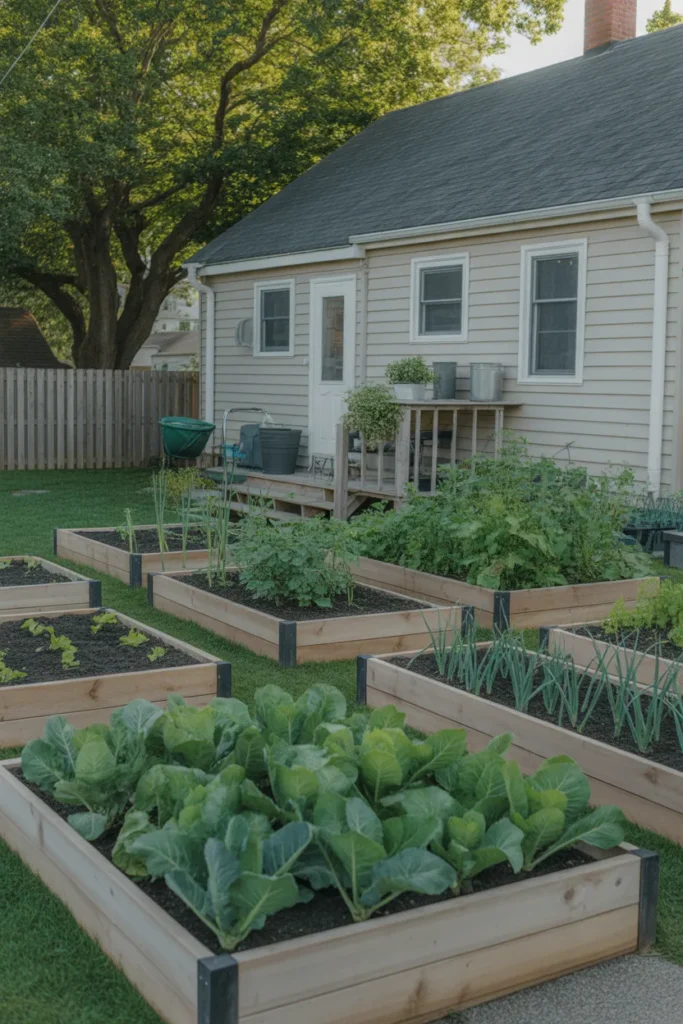
A transitional vegetable garden layout connects different yard sections smoothly. It creates a natural flow from side yard to front yard space. Beginners can expand gradually without redesigning everything. This layout makes the garden feel cohesive and well-planned.
22. Alternating Crop Row Layout
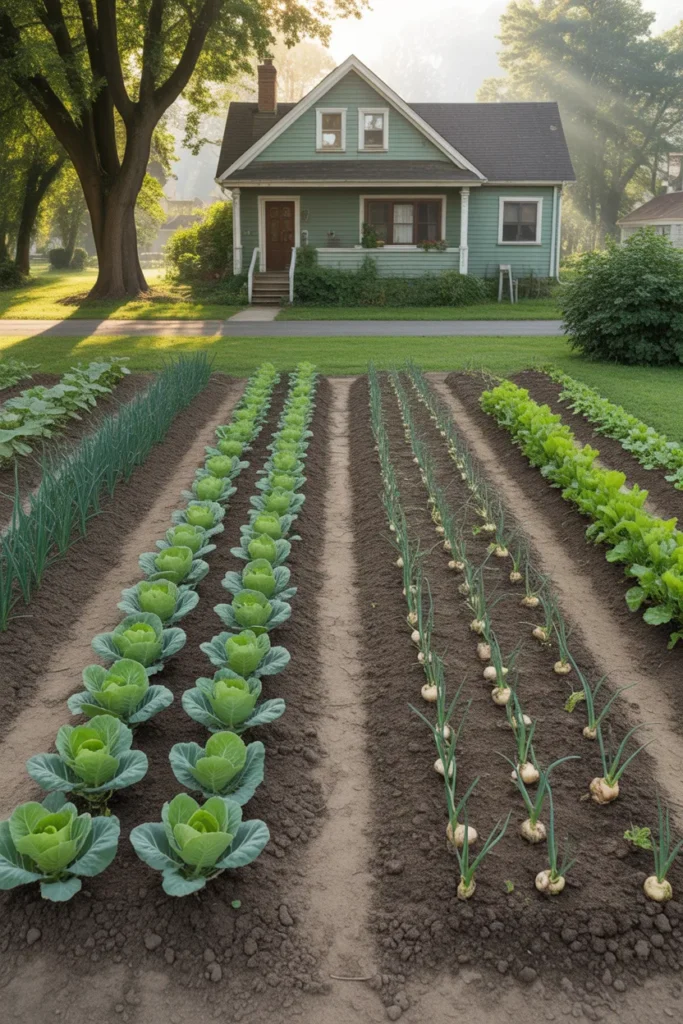
An alternating crop row vegetable garden layout improves soil balance and pest control. By switching plant types between rows, you reduce nutrient depletion. The pattern also keeps the garden visually interesting. This method is simple and productive for beginners.
23. Compact Urban Layout
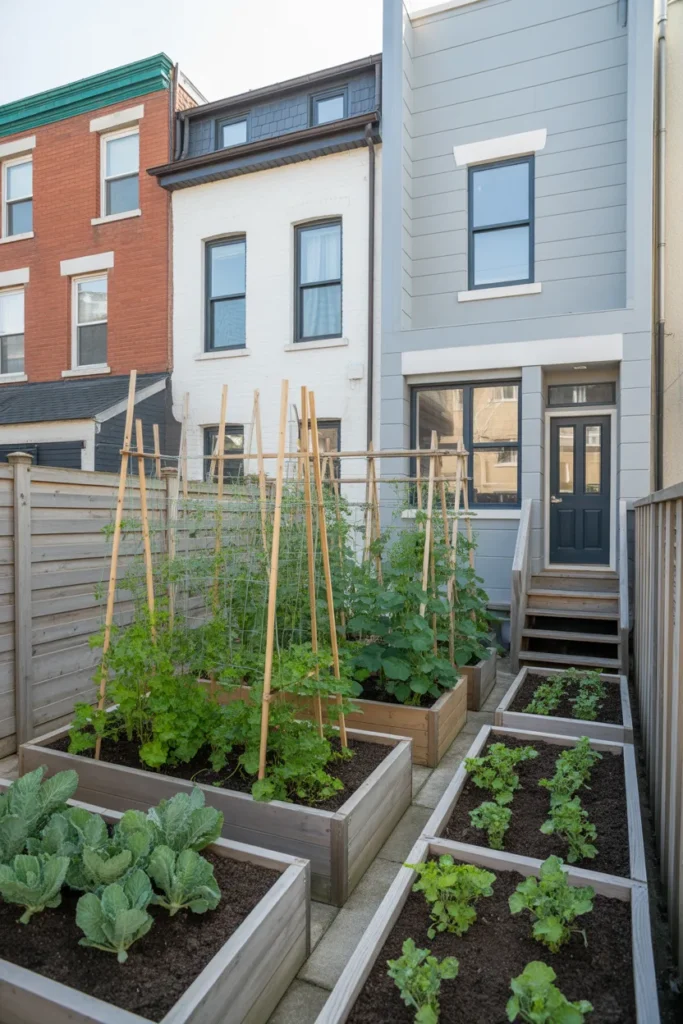
A compact urban vegetable garden layout works well for limited spaces. Narrow beds and vertical elements maximize productivity. Beginners can grow essential vegetables without overcrowding. It proves that even small front yards can be highly functional.
24. Decorative Edged Bed Layout
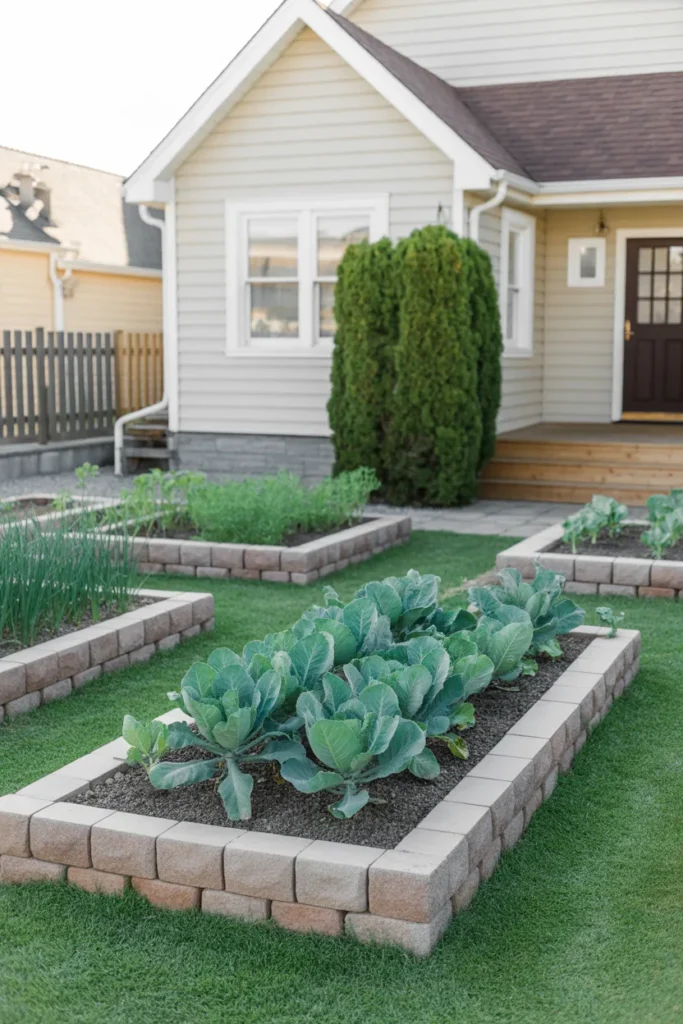
A decorative edged vegetable garden layout adds definition and charm. Brick or stone borders keep soil contained neatly. This makes the garden look polished and intentional. Beginners benefit from clear boundaries and easier maintenance.
25. Central Feature Layout
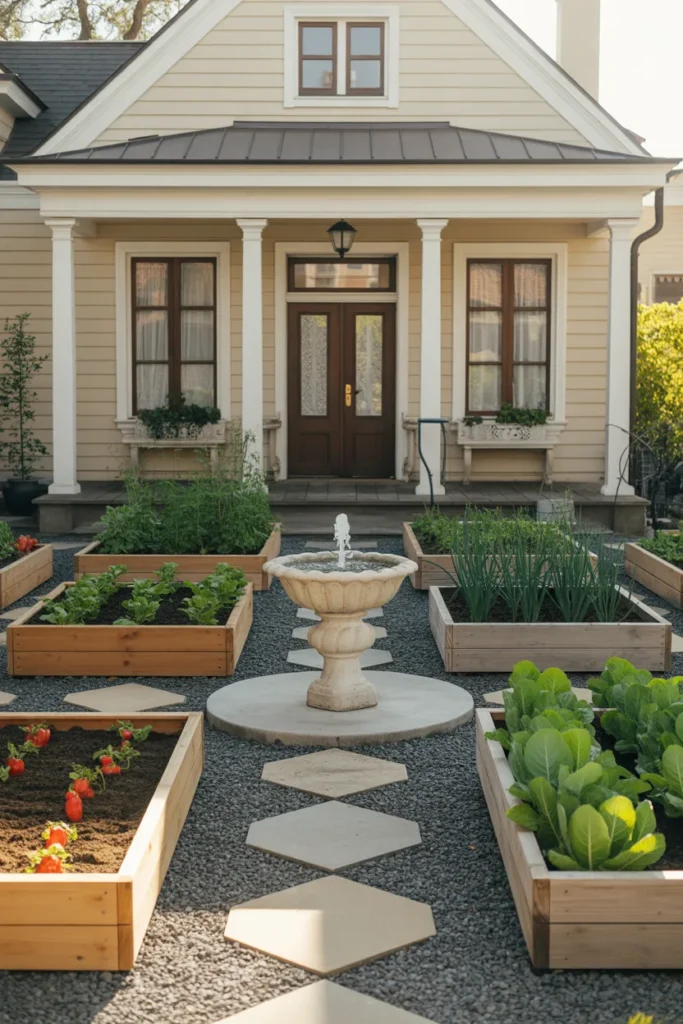
A central feature vegetable garden layout creates a focal point. Beds are arranged symmetrically around a decorative element. This adds visual interest while maintaining practicality. Beginners enjoy the balance between beauty and productivity.
26. Layered Height Layout
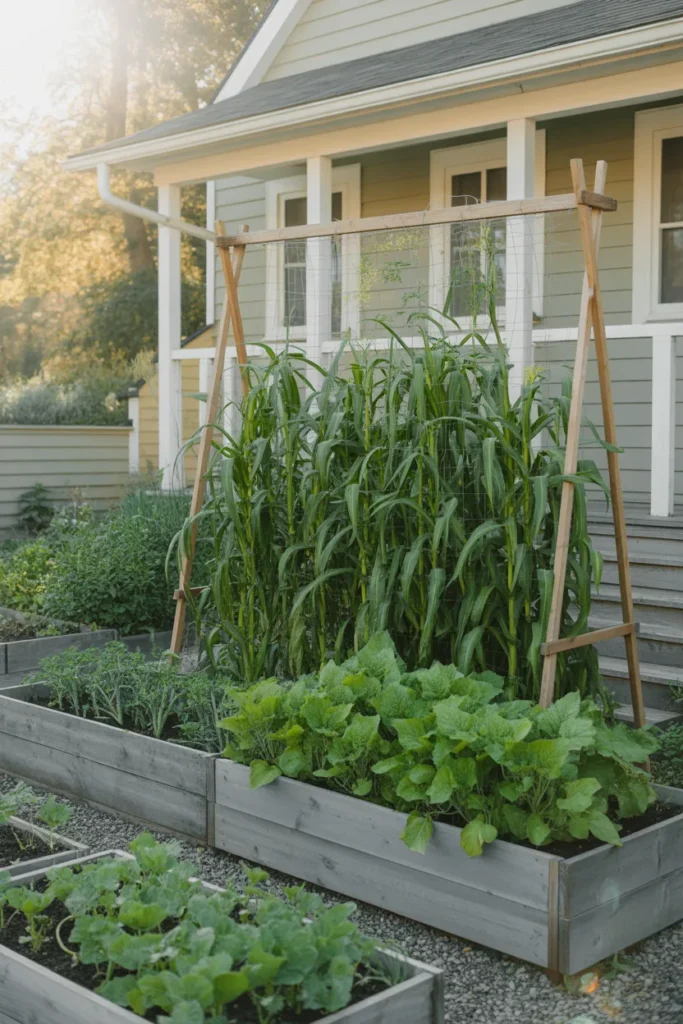
A layered height vegetable garden layout organizes crops by size. Taller plants are placed at the back to prevent shading smaller ones. This improves sunlight exposure and airflow. It also creates a visually dynamic front yard garden.
27. Gravel Path Layout
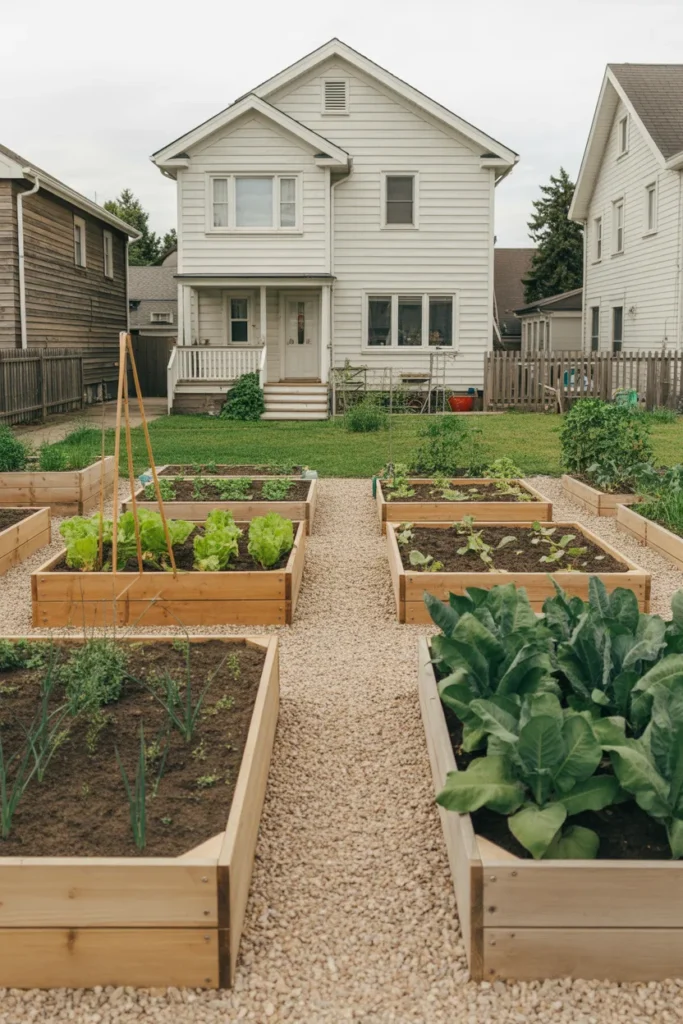
A gravel path vegetable garden layout ensures clean and accessible walkways. The gravel prevents muddy conditions after watering or rain. Beginners can easily move between beds without compacting soil. It keeps the front yard looking structured and tidy.
28. Rectangular Plot Layout
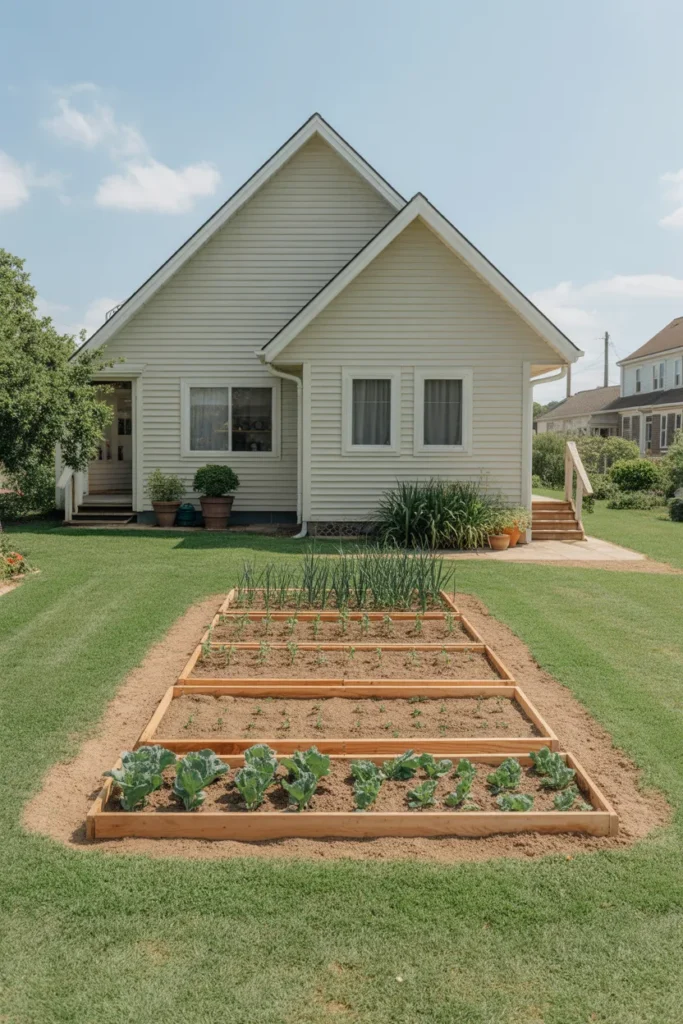
A rectangular plot vegetable garden layout is straightforward and efficient. It provides clear boundaries and easy crop rotation. Beginners find it simple to measure and plan. This classic design works well in most front yard spaces.
29. Half-Moon Bed Layout
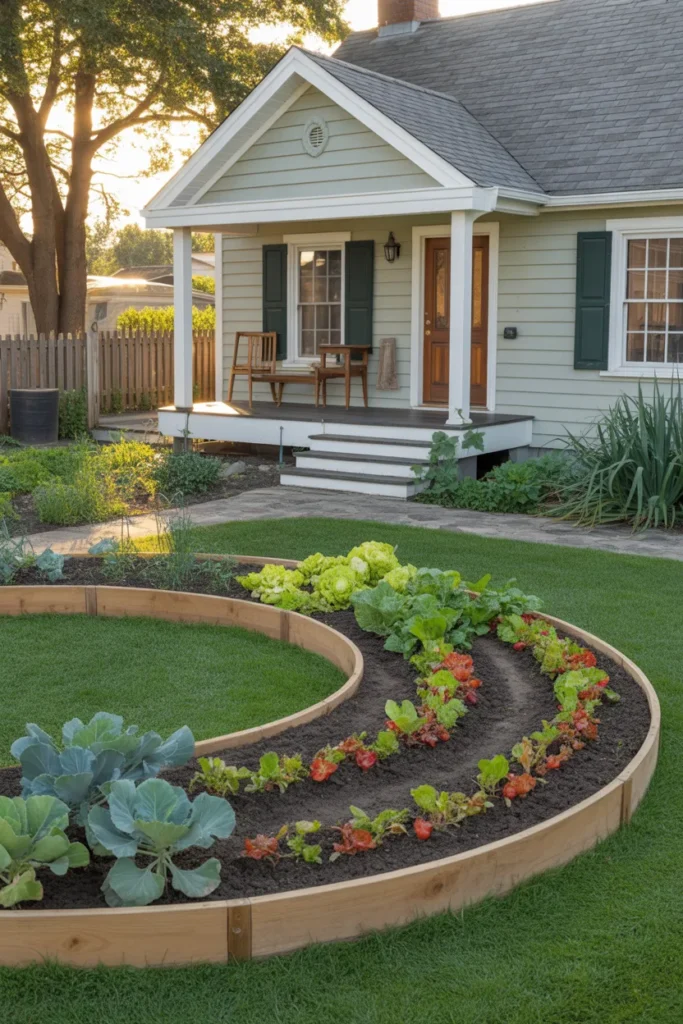
A half-moon vegetable garden layout softens the look of a front yard. The curved shape blends naturally with landscaping features. It creates a decorative yet functional growing space. Beginners can enjoy both style and simplicity.
30. Starter Family Layout
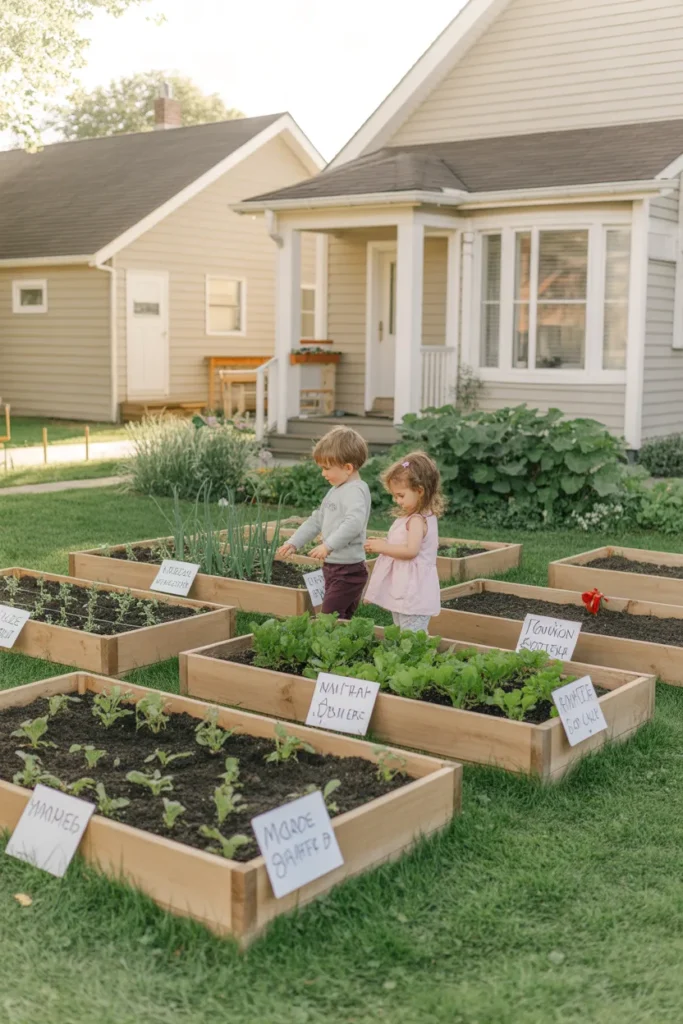
A starter family vegetable garden layout encourages shared gardening. Small labeled beds make crop identification easy. It simplifies care routines and responsibilities. Beginners can involve the whole household in growing fresh vegetables.
31. Spiral Herb & Veggie Layout
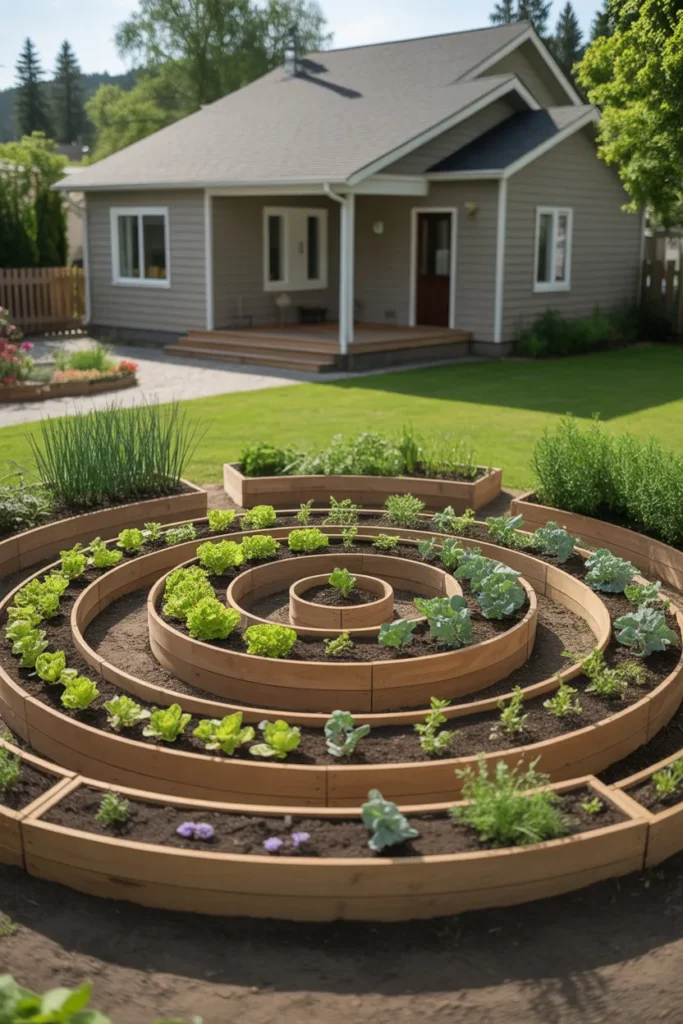
A spiral garden layout adds creativity to your front yard design. The circular form allows different plants to receive varied sunlight levels. Herbs can be placed at the top while moisture-loving crops grow lower. This layout is compact, efficient, and visually striking for beginners.
32. Narrow Side Strip Layout
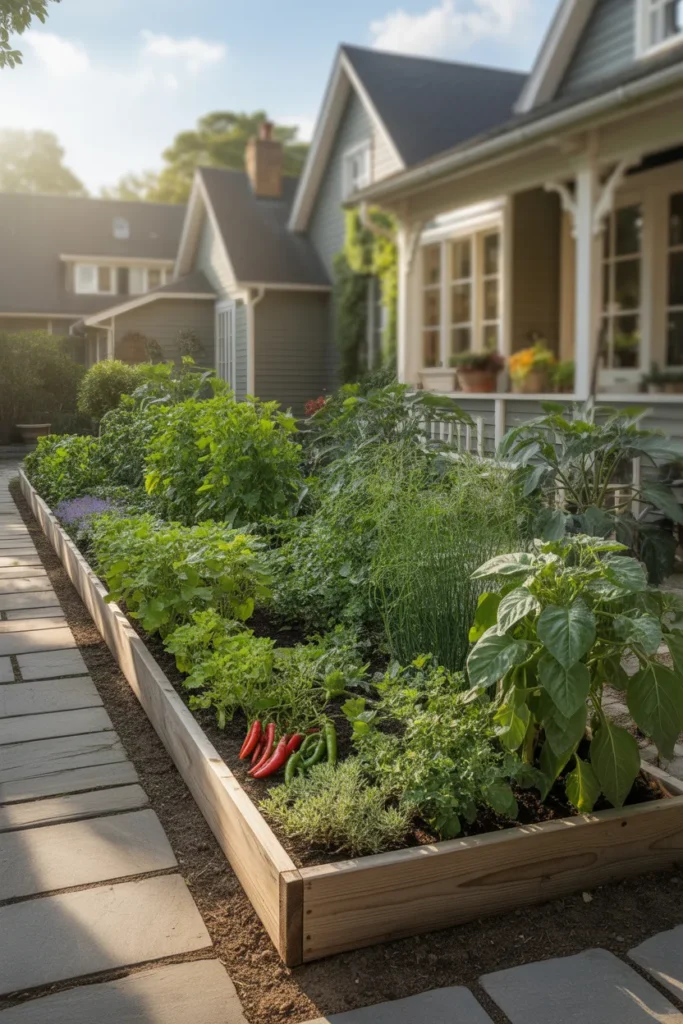
A narrow strip vegetable garden layout works perfectly beside driveways or walkways. It transforms unused side spaces into productive growing zones. Beginners can plant compact vegetables without overcrowding. This design keeps the main yard open while maximizing space.
33. Checkerboard Planting Layout
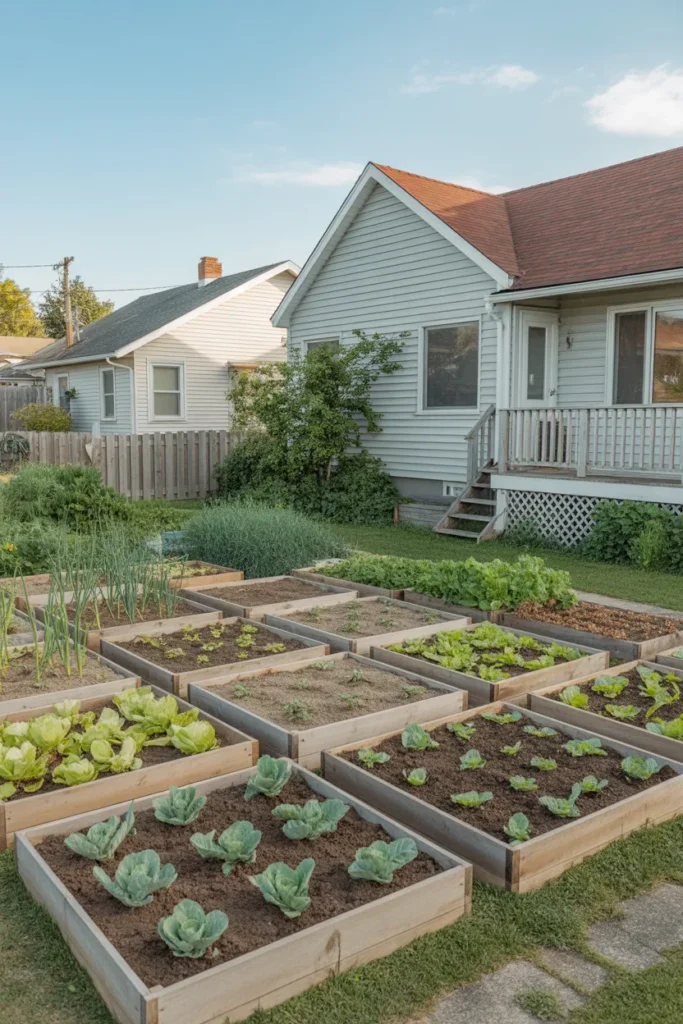
A checkerboard garden layout creates a visually organized pattern. Alternating crops help with pest control and soil balance. The symmetrical design feels neat and easy to maintain. Beginners enjoy the structured yet creative appearance.
34. Rustic Wooden Box Layout
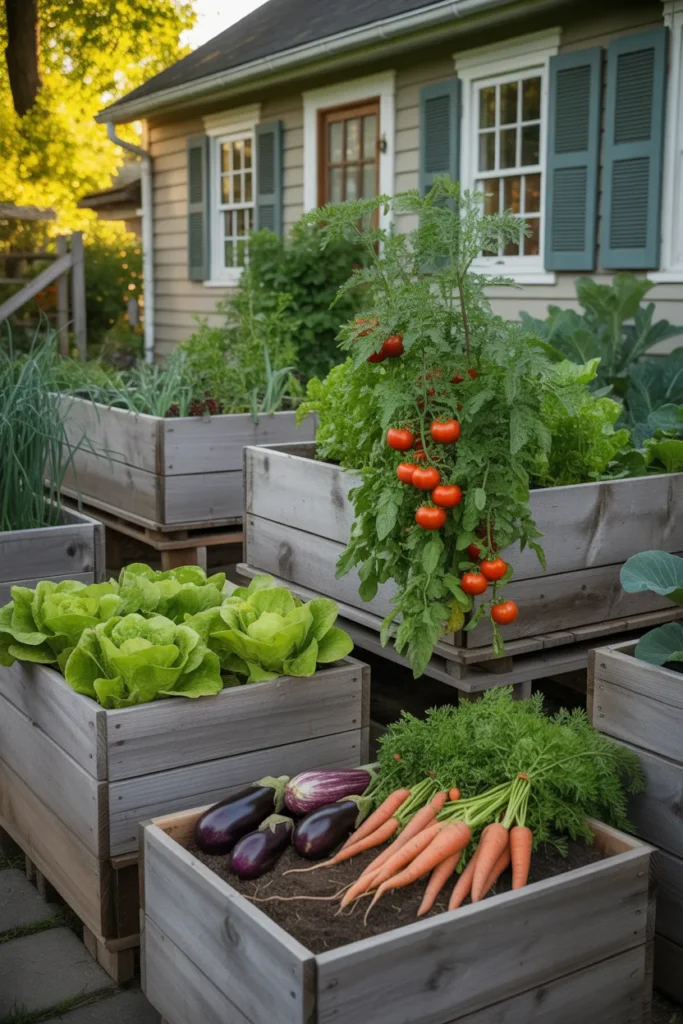
A rustic wooden box vegetable garden ldeas brings warmth and charm. Individual boxes make crop rotation simple each season. This design keeps soil contained and manageable. Beginners appreciate its flexibility and traditional look.
35. Modern Geometric Layout
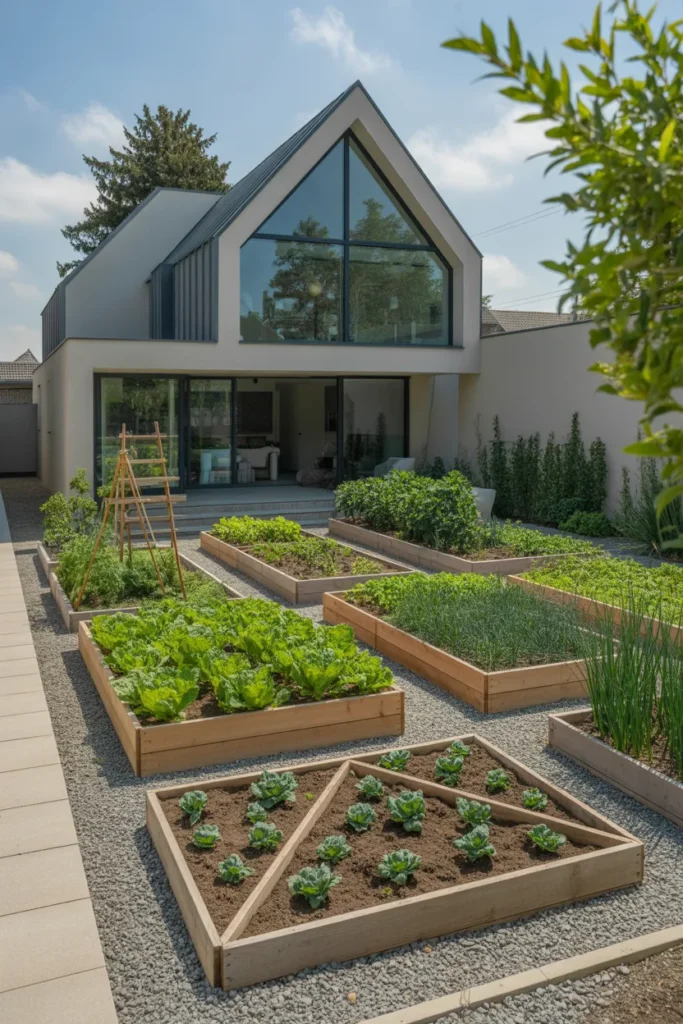
A geometric vegetable garden ldeas introduces bold shapes into the yard. Structured lines create a modern and stylish appearance. Each section can hold different vegetables for organization. It blends productivity with architectural design.
36. Low-Maintenance Mulch Layout
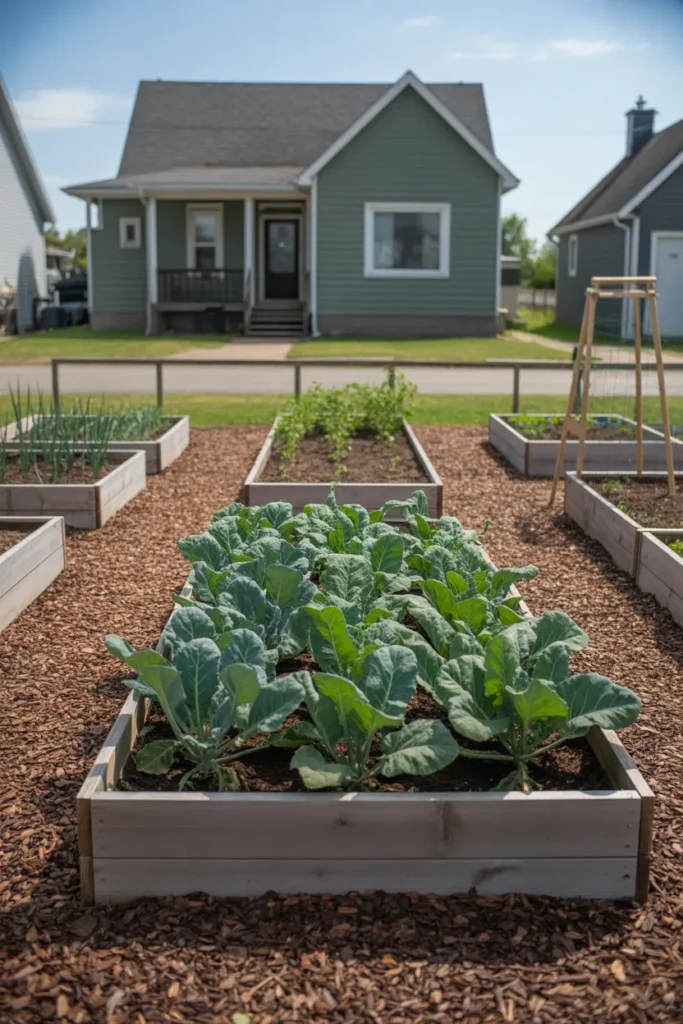
A mulch-based vegetable garden ldeas reduces weeds and retains moisture. The soil stays healthier with less frequent watering. Beginners benefit from reduced maintenance efforts. This layout keeps the garden clean and efficient.
37. Seasonal Rotation Layout
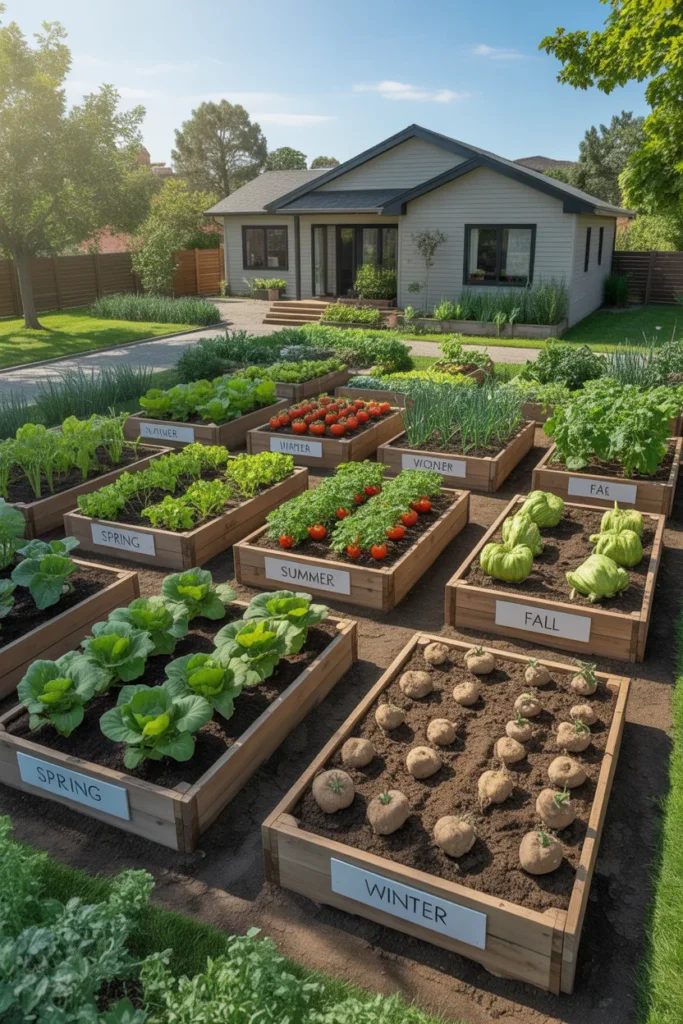
A seasonal rotation vegetable garden ldeas improves soil health long term. Crops are rotated between sections each season. This prevents nutrient depletion and disease buildup. Beginners can maintain productivity year after year.
38. Cottage-Style Front Yard Layout
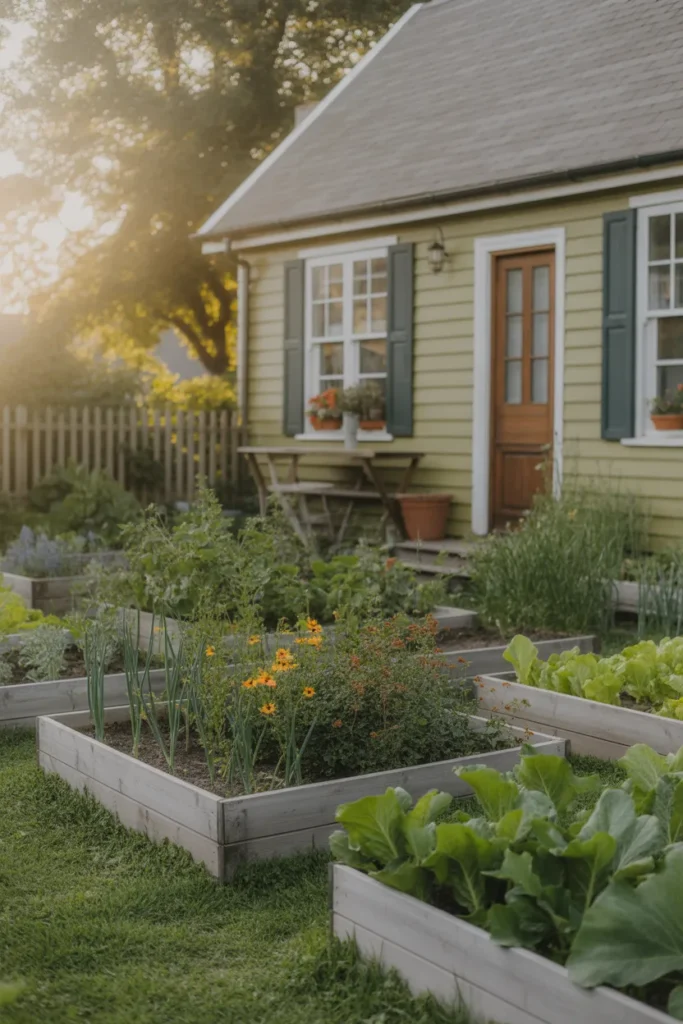
A cottage-style vegetable garden ldeas blends vegetables with flowers. This attracts pollinators and adds natural beauty. The relaxed planting style feels welcoming and organic. Beginners can enjoy both harvest and aesthetics.
39. Compact Raised Planter Layout
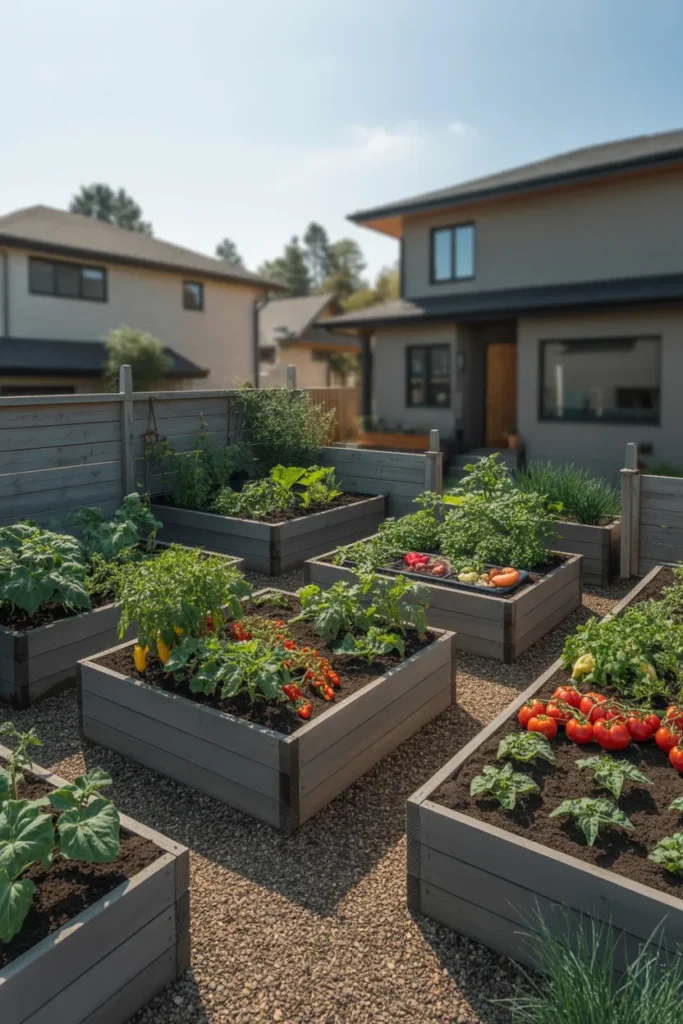
A compact raised planter garden layout is ideal for limited space. Elevated beds make planting and harvesting easier. Soil quality can be controlled more effectively. This layout keeps everything neat and beginner-friendly.
40. Fully Symmetrical Showcase Layout
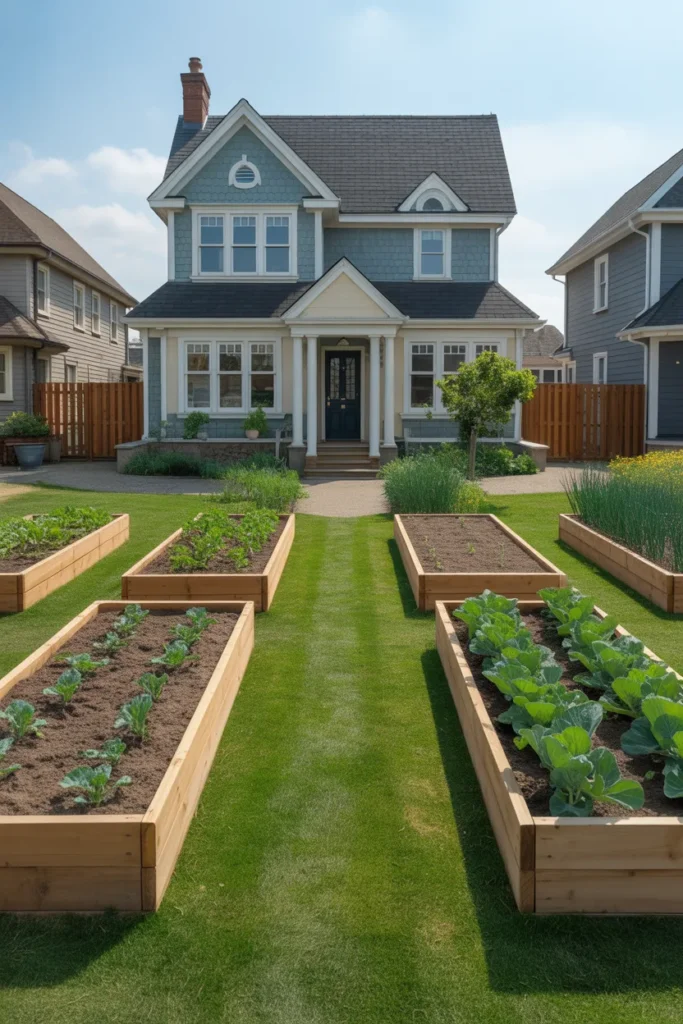
A fully symmetrical garden layout creates a polished and elegant look. Matching beds provide balance and structure. It enhances curb appeal while remaining highly practical. Beginners can maintain order while enjoying a productive harvest.
Conclusion
Choosing the right garden layout sets the foundation for a thriving and manageable garden. Simple designs like raised beds, grid systems, or symmetrical layouts make it easier to stay organized throughout the growing season. When your space is planned properly, daily tasks become less stressful and more enjoyable. A structured layout also encourages healthier plants and higher yields.
As a beginner, focus on layouts that match your available space and comfort level. Start small, observe what works best, and expand gradually as your confidence grows. With consistency and thoughtful planning, your garden layout will not only produce fresh harvests but also create a welcoming and beautiful front yard space. Gardening becomes easier when your design works with you, not against you.